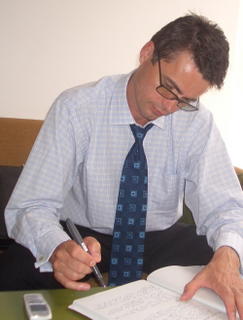
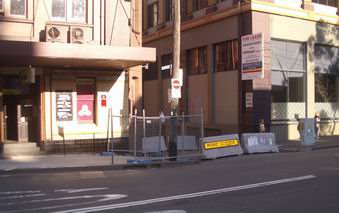
Somewhat confrontational fellow right of centre blogger Toby (Bilious Young Fogey) picks up on the Treasurer's comments in Parliament this week and I find that I could not agree more. We need to draw a line on this anti-Australian undemocratic agenda and not allow it to prosper under the protection of a politically correct umbrella.
It does not go unnoticed that inner city Labor party members are those opposing the anti-terror laws and arrests in different jurisdictions. Where are the Labor lawyers from Bankstown or Canberra? Perhaps the terminally weakened Kim Beazley et al have left another political vacuum just like the war in Iraq now filled by members of the inner city trendy Labor left. SMH on terror day in court.
To the point
Australians are famously blunt.
The Federal Treasurer:
"If you are somebody who wants to live in an Islamic state governed by sharia law you are not going to be happy in Australia, because Australia is not an Islamic state, will never be an Islamic state and will never be governed by sharia law. We are a secular state under our constitution, our law is made by parliament elected in democratic elections. We do not derive our laws from religious instruction. There are Islamic states around the world that practise sharia law and if thatÂ’s your object you may well be much more at home in such a country than trying to turn Australia into one of those countries, because itÂ’s not going to happen."
Saturday, November 12, 2005


Thursday, November 10, 2005
Malcolm Turnbull on Sustainable Cities Inquiry

On 12 September 2005, the House of Representatives Standing Committee on Environment and Heritage tabled its report on the inquiry into sustainable cities entitled "Sustainable Cities".
On Tuesday night Liberal Wentworth MP and member of the committee Malcolm Turnbull provided an informative and animated overview of the report, why the Federal Government undertook this inquiry, what the report recommendations are, how will they be implemented and what this report means for Sydney. It was no surprise to hear that the bi-partisan report dovetails with the Council's campaign for a shift in investment in the City from roads to public transport. In fact the report points to this growing trend all over the western world - including car loving USA. Malcolm's address dealt in detail with one of his recurring topics - water recycling with a scathing assessment of the Carr/Iemma government's proposal to build a desalination plant. Another PPP that has all the hallmarks of a one sided deal like the CCT. It should be noted that Council adopted my resolution to oppose the desalination plant as a solution to Sydney's water crisis instead calling upon the government to implement improved water reycling and harvesting methods.
Malcolm was joined by Professor Peter Newman who is the NSW Sustainability Commissioner who explained his response to the report saying that finally the Federal government has seen the light for our capital cities. A thorough Q&A session included the ABC celebrity host Adam Spencer dishing up the old 'the Howard government will not sign Kyoto' mantra which was deftly hit for a six by Malcolm pointing out that we are on target to exceed reductions in greenhouse gas emissions dictated by Kioto and people should move beyond the signing of a piece of paper to more sustained outcomes for the environment. The transcript of Malcolm Turnbulls speech is below and viable at is web site:
http://www.turnbullforwentworth.org.au/news/default.asp?action=article&ID=344
Links to the report and evidence transcripts are at the bottom of the speech.
"Sustainable Cities" - Malcolm Turnbull speaks in the City Talks Series at Sydney Town Hall
Tuesday, November 08, 2005
Lord Mayor, Clover Moore, thank you very much for your kind words and for inviting me to speak tonight. Robert Whitehead, marketing manager of the Sydney Morning Herald, thank you for your support of this event and in particular for the outstanding series on the state of Sydney which your newspaper published earlier this year. Councillors, former Lord Mayors, Ladies and Gentlemen, About six weeks ago the House of Representatives Standing Committee on the Environment produced a report entitled “Sustainable Cities”. Mal Washer MP was our chairman, although the inquiry had commenced in the previous parliament with Bruce Bilson as its Chair.
The Report considers the state of our great cities, describes their unsustainability and makes important recommendations about how the Commonwealth can provide further national leadership to ensure our cities are developed sustainably and responsibly. The Committee is a bipartisan one. It had six Liberals: Mal Washer, Russel Broadbent, Jackie Kelly, Stewart McArthur, Jason Wood and myself and four Labor members: Jennie George, Kelly Hoare, Harry Jenkins, Duncan Kerr. There were no dissentients from its recommendations. The members were from New South Wales, Victoria, Western Australia and Tasmania and from both city and regional electorates. Peter Newman has already given us the best definition of sustainable development from the 1987 World Commission on Environment and Development (the Brundtland Commission): “..development that meets the needs of the present without compromising the ability of future generations to meet their own needs.” But first a little background. We are an urban nation: nearly two thirds of our population live in our capital cities and more than 80% live in cities with populations of more than 50,000. 40% of our population live in Sydney and Melbourne alone. These cities not only house the bulk of our population they are the main drivers of our economy and becoming more so as services occupy a larger part of our GDP.
It has been obvious for many years that our cities face enormous challenges. Congestion, pollution, water and power shortages to name just a few. We live in the driest continent, yet Australia consumes the most water per capita in the world 1540 kilolitres per annum. North America is 1510 and Europe 665. In a world challenged by global warming our greenhouse gas emissions are also the world’s highest at 27 tonnes per capita per year. Another UN Report puts us second in Co2 emissions, just behind the USA. With petrol prices rising in response to growing demand from China and India, our dependency on the automobile has increased. Vehicle kilometres travelled has increased by almost 60% in cities like Sydney between 1980 and 2000. Our domestic waste stream is 620 kilograms per capita per year: second only to the United States. We recycle very little of our waste water, around 2% in Sydney. Our high consumption, low sustainability cities are bad for our health too. Our automobile dependence has made us fat. The Committee heard that by living on a free way ‘you are four times more likely to be obese than if you do not.” Are these the inevitable consequences of urban growth? Is this just a by product of prosperity, a modern example of “where there’s muck there’s brass.” Are the proponents of sustainability condemning us to a poorer, less comfortable world? Not at all.
Consider public transport. Peter Newman has demonstrated that cities with a higher useage of rail, as opposed to private automobiles, are wealthier not least because they spend less on transport. Many world cities as wealthy or wealthier than our own (London, Berlin, Paris, Zurich to name but a few) emit much less CO2 in transport emissions. Consider water: do we seriously imagine that we would be poorer if Sydney were to have a sustainable supply of water. Our unsustainable cities are the inevitable consequence of years of complacency, of years of folly. Sydney’s unsustainability is probably the most perilous in Australia. We are literally at risk of running out of water due to a failure to embrace sustainable management of our water. There are more cars on our roads than ever with more congestion, more pollution and more expense.
We are witnessing today, literally under our feet, the latest chapter in this sorry and perverse tale of mismanagement:the Cross City Tunnel. After receiving an upfront golden handshake of over a hundred million dollars, the State Labor Government set out to ensure that the tunnel operators achieved the highest possible revenue. They did this by creating congestion in the city and surrounds to force people into the tunnel. Their contractual obligations, not yet fully revealed or understood, involve substantial financial risks for the Government should it dare, heaven forbid, to improve the quality of public transport in the vicinity such as to reduce vehicular traffic below the owners’ assumptions on the major arterial roads connecting to the trunnel. An obvious avenue for expansion of our public transport network as Gary Glazebrook explained in his report on light rail commissioned by the City of Sydney is from Central and the CBD out along Anzac Parade, servicing the showground precinct, the racecourse, University of NSW and the southern end of the Eastern Suburbs. But this is part of the prime catchment for the Cross City Tunnel. Why do we build new rail infrastructure? To provide an alternative to private vehicles and reduce traffic on the roads. Yet if that were done, the Labor Government would face a renegotiation of the CCT contract and potentially a heavy financial cost. So here is the short, harsh reality: the Labor Government here in Sydney has entered into a contract compelling it to inflict congestion on our city and deterring it from expanding public transport all in the interests of ensuring a privately owned tunnel can make a profit. All this at a time when it is obvious that a key priority of Government should be to provide alternatives to private vehicle travel to reduce congestion.
Former NSW Auditor General Tony Harris astutely described this complacency when he said that Bob Carr’s political style had been so successful it had become a model for all other State and Territory Labor leaders. “Gone is the idea that governments should lead and should challenge vested interests. It has been replaced by Carr’s model: a government should act more like a concierge offering modest assistance to residents but not intervening. Governments should certainly not reform markets or challenge society, even if that is necessary to enable them to meet contemporary problems.” [AFR 18/3/2005 p. 83] What a contrast with the Federal Government! With a strong economy offering every temptation to complacency and resting on the laurels won from past reforms, John Howard’s Government approaches its first decade with an enthusiasm for reform as keen as it was on the day it was elected.
We have known for decades that oil was a finite resource. We have known for decades that water is a scarce commodity not a free good. Yet, with few exceptions, State Governments have persisted in and exacerbated unsustainable practices to the point where the viability of our cities is at risk. For millennia a necessary requirement of urban life has been a reliable supply of safe drinking water. The remnants of the Roman aqueducts still march across the European countryside reminding us that water science and engineering is a perennial problem. Great cities have died, literally, when the water ran out. Assuming there are no increases in water supply all of our largest cities will face a significant water deficit: a gap between sustainable yield and demand. Sydney and Brisbane will be the worst off with a gap of 38% and 33% respectively. To put that in absolute numbers, if you assume Sydney’s sustainable yield is 600 billion litres (itself an optimistic assumption), total demand will be 826 billion litres. The NSW Government’s own Metropolitan Water Plan stated last year “Sydney is using more water than is sustainable…water could be a key limiting factor on Sydney’s future growth and prosperity.” And those limits could be considerably more severe than we think. We have seen very significant reductions in rainfall across Southern and Eastern Australia. The average stream flow from 1911 -2003 in Perth was 285 billion litres. From 1975 to 2003 it had reduced to 164 billion litres. The fall is even more precipitous if you consider the mean over the last 7 years where it has reduced to 120 billion litres.
Turning to Sydney, there is grave concern that the estimates of sustainable yield, based on 95 year averages, are no longer valid. If, as it would appear, there has been a real shift downwards in rainfall, then the long term averages are irrelevant. Sydney’s 600 billion litres of sustainable yield may be a serious over estimate. For example the long term average inflow into the Hawkesbury Nepean system is 1,442 billion litres pa. The average over the period 1991-2002 is 697 billion litres. More than a decade ago Sydney Water knew that it needed substantially to augment the water supply for Sydney. This was driven by growth in demand. That need of course is much greater now with the drop in streamflows. There were basically only two viable options: a new dam, or large scale recycling. Everything else was either not big enough, or in the case of desalination, too expensive. The Labor Government vetoed both a new dam and raising the dam wall at Warragamba and then for a decade has done virtually nothing. They just hoped it would rain. But the rains did not come and we find ourselves now in the extraordinary situation where the dams are only 38.8% full. If the drought continues for two years the city will run out of water. And what has been the price of this folly? In a desperate effort to find a quick fix, Morris Iemma’s Government has resolved to build a desalination plant. The desalination plant, likely to cost around $2 billion, is estimated by the Government’s own consultants to deliver fresh water at a cost of $1.53 per thousand litres.
The former Premier Mr Carr described desalination as bottled electricity and that was no exaggeration. As the parliamentary library recently noted the energy requirement for desalinating seawater is between 4 and 5 times as high as it is for wastewater reclamation. So this is not only the most expensive water available, it will also generate substantially increased greenhouse gas emissions. For whatever reason Sydney Water has declined to embrace recycling The opponents of recycling have contended that people will not drink recycled water. This “yuk factor” is a false issue both in terms of science and practicality. It is scientifically false because we know there is no obstacle to purifying waste water. The drugs and pathogens which need to be excluded have a larger molecular size than the salt which is removed by R/O. So, as Prof Greg Leslie, has pointed out if you believe R/O can desalinate it can certainly purify. But from a practical point of view there is simply no need to introduce recycled water into the potable water system.
There are ample uses for recycled water: industrial, parks, gardens, street cleaning and above all, replenishing the streamflows of our rivers and thereby replacing the potable water currently released into them. The desalination plant is likely to be the greatest white elephant ever constructed in this State. A plant of this kind has to have a take or pay contract so that the owners know they will be paid something even if, because of high rainfall, there is no need for their water. The normal deal is 60% of the contract price. So if the plant is to provide 180 billion litres at $1.50 a kilolitre that’s $270 million a year. If the rains come and the dams full, our State would be up for $155 million for water it never received. But it is better to pay 90 cents for water you don’t receive than $1.50 for water you don’t need. On the other other hand recycling achieves an important environmental objective: cleaning up the oceans regardless.
The failure to provide for a sustainable water supply for this city has resulted in water restrictions which are likely to become more severe unless there is a major break in the weather patterns. The approach has been to make people with gardens feel they are responsible for the water shortage, as opposed to the politicians who failed to plan for our water needs. The truth is that we all benefit from our gardens. We should be able to water them, we should aim to have enough water to maintain a green city. As my friend Ian Kiernan, the founder of Clean Up Australia, says again and again it is not the supply of water which has failed us, we have failed to manage our water. This failure to embrace recycling is particularly puzzling given the National Water Initiative. A Howard Government initiative to which the States signed up at COAG, it has the backing of $2 billion of Federal money in the Australian Govt Water Fund, It has as a key objective for urban water reform: “ encourage the re-use and recycling of wastewater where cost effective.”
Peter Newman has spoken about transport already and I touched briefly on the problems of car dependency in our city already. I would simply re-emphasise that it is patently obvious that we need to promote the use of public transport and we cannot do that unless we are prepared to make mass transit safe, reliable, clean and above all faster on the main corridors than private cars. Distance is a temporal not a linear concept Yet the government’s answer has been to speed up the cars and slow down the trains. So what’s the solution offered by the Sustainable Cities Report? The National Competition Policy over the last decade has together with other economic reforms driven by the Howard Government substantially improved our productivity.
It has been a Commonwealth led initiative with incentive payments to the States for opening up their sheltered monopolies to competition. This recognised that all governments would share in the benefits of economic growth occasioned by this reform and that the bulk of that benefit would accrue to the Commonwealth. The Sustainable Cities report recommends we follow that model and establish a Sustainability Commission which would agree on sustainability benchmarks against which government policies would be judged. The allocation of Federal funds , especially to transport, water and other infrastructure, would depend on meeting those benchmarks which would of course also apply to the Federal Government. Incentive payments should also be considered to reward governments which meet the benchmarks. This would reinforce the leadership shown already with Auslink which included $1.8 billion in rail projects that should double the freight capacity of the North South rail network within 5 years. It would reinforce the $2 billion of the Australian Government Water Fund which is committed to supporting the objectives of the National Water Initiative. The Sustainable Cities Report makes a number of other important recommendations consistent with those relating to governance. These include: - Australian Government transport infrastructure funds include support for public transport and active transport (dedicated bicycle ways) - Removing the FBT concessions for company cars which encourage greater use of these motor vehicles - The preparation of an independent report on the water options for all of our major cities - A doubling of the photovoltaic rebate and further promotion of the use of solar energy.
I commend the report to you. It can be found on the www.aph.gov.au website at this link www.aph.gov.au/house/committee/environ/cities/report.htm where you will find not only the report but also transcripts of evidence and all of the submissions received.
I said at the outset that the state of our cities is the consequence of complacency. This meeting tonight shows we are awaking from our slumbers. We can working together reclaim our cities, for ourselves and for our children.
Tuesday, November 08, 2005
Whitlam Industry spins away..again (yawn)
 There's a political joke in the USA that sooths or torments the Democrats and their continuing rage about the Al Gore election defeat (rage maintenance is not unique to the Australian left). In response to a rage attack Republicans comment 'look - yes its true the Republicans have the White House but don't forget the Democrats have the West Wing..." a reference to the popular but fantasy world political drama 'West Wing' with its political correctness giving a cyber fix to raging Dems and the left wing media. In Australia we could say ' yes the Liberals have the Lodge (or Kirribili House) but don't forget Labor have Gough Whitlam'.
 The Whitlam industry hits its annual overdrive as the aging 'ragers' self flagellate linking the 1975 removal of Australia's most incompetent Federal government with any contemporary political issues offending the sensibilities of the inner city left. For Australian's November is a set piece of predictable headlines - Melbourne Cup, Gough's latest repetitive interview and Lest We Forget Remembrance Day.
 November 11, 1975 thankfully slides away as a irrelevant memory to many Australians and is now thankfully to become a museum oddity. 'Interesting times' appears to link the anti-terror laws with Gough's removal. I declined my invitation to the MCA 'bipartisan' event below.
 “Dissident Voices” SPECIAL EVENT 6.30pm Friday 11 November 2005
In association with the exhibition Interesting Times: Focus on contemporary Australian art, the MCA presents a unique twilight event by 3 of Australia’s most radical writers/performers Ania Walwicz, Amanda Stewart & Ruark Lewis, alongside composer-musician Rainer Linz. This bipartisan event will commemorate ‘The Dismissal’ of the Whitlam Government 30 years ago in 4 very different and unexpected ways. MUSEUM OF CONTEMPORARY ART, Level 6 Admission: $12/$10 concessions/$8 MCA Members and AmbassadorsBookings essential as drinks will be served on the rooftop terrace 02 9245 2484 or education@mca.com.au
 Meanwhile Piers Akerman takes the blow torch to the rewriting of the Whitlam legacy and the Telegraph's editorial echoes the view of most Australians:
"We're still several days away from the anniversary but there are few tributaries of this most heavily-explored part of our history which have not been given (another) going-over.
Not with any new insights or revelations, no forgotten morsel casting new light on the subject. Instead, it plays like a tragi-comedy of manners, where the same players assume the same roles and go through the same ritualised head-shaking at the day democracy died." Read more here
It's Time to forget myth of Whitlam
By PIERS AKERMAN
AS THIS Friday's 30th anniversary of the dismissal of Gough Whitlam's dismal government on November 11 draws closer, a claque of self-indulgent old farts are engaging in an orgiastic welter of Whitlamophilia that overlooks some major truths....
Clearly, the rage was only to be maintained until polling day.
And for the bulk of Australian voters it was, as, angrily, they voted decisively to dump Labor four weeks later on December 13, when Malcolm Fraser and the Coalition swept into office with 91 seats to Labor's 36. Some rage indeed.
Obviously, it was not the rage that geriatrics who danced the twist to Little Pattie singing Labor's campaign song in the 1972 It's Time election hoped for.
Once again, Labor's inner urban branches had lost the plot as surely as the Whitlam government had lost office.
Thirty years on, all the indications are many of the same people and their indignant younger incarnations are still wedded to the same utopian fantasies that mesmerised the Whitlamites as they wandered the political landscape seeking a messiah to rekindle Labor's phantom Light on the Hill.
Read more here.
Piers reminds us of the appalling Loans Affair where the Whitlam government sought petro funds from the Iraq's Ba'athist connections - conveniently overlooked by the Whitlam industry just as the nod and wink to Indonesia over the East Timor invasionasion is conveniently side stepped by the inner city politically correct. John Howard addressing this national embarrassment will surely be judged by historians as one of his great legacies as Australia's second longest serving Prime Minister.
Regular eCouncillor readers will be disappointed if I agreed fully and totally with Piers Akerman and rest assured I will only go so far down his conservative path. One of my political heroes Malcolm Fraser does not escape the Pier's heated magnifying glass:
'Mr Fraser didn't present a great alternative, he lacked courage and had to be urged to act against what was patently a poor government, but his opposition would have been regarded with contempt if it had not taken steps to restore stability. '
Conservatives are not in the Fraser fan club but Liberals such as myself are proud of his actions on November 1975 as well as his post election progressive agenda such as legislation introducing Aboriginal land rights in the Northern Territory and Australia's unconditional acceptance of thousand Vietnamese boat people. As Fraser recently lamented his one regret in life is the Liberal party emerging as the Conservative party. His view is that Menzies wanted to found a progressive Liberal party and not a Conservative party. A view supported by many including speeches made by Menzies himself.
.
Monday, November 07, 2005
Reform needed for post parliamentary jobs
The Sydney Morning Herald's Paul Sheehan explores the mess that has become the Carr/Iemma Labor government's vigorous embrace of Public Private Partnerships. Particularly so with the daily entanglements of the Cross City Tunnel and the black hole swallowing Joe Trippodi in Epping. Not that Joe is to blame - it seems the knives are out for the luckless Carl Scully or 'Snarl Cully' as he is tagged by local government Councillors who have dealt with his brusque manner over local roads issues across the state.
Whilst I am a strong supporter of PPP's and point out to critics that thus far any losses the CCT is making are being wholly born by the private partner. Those (mainly in the left) who say PPP's privatise profit and socialise the risk need only look at two spectacular failures that have cost the private partners big money whilst the public partner (the taxpayers) have been insulated from any losses. One off-shore is the Wimberley Stadium PPP that has caused Multiplex so much stockmarket pain. Another closer to home being the Flinder's Street Station upgrade in Melbourne that has been nothing but bad news for the Leightons Construction whilst the Victorian government rests protected from losses (but perhaps not the growing electoral anger). Even the collapse of the Lanecove Tunnel will cost no money to the public purse as the construction firm will be insured and is already offering appropriate compensation to those affected - inevitably including the governemnt.
PPPs bring forward major capital works projects that government's are either not in a position to finance or do not prioritise highly up the list. If the CCT was to be publicly financed I suspect that the Carr government would have shelved the expensive project in favour of upgraded hospitals and schools in key regional and outer suburban seats. (note PPP's are already building and running schools in NSW). I believe that to build the City's ambitious $2 billion light rail network we will have to consider PPP's at some financing and operational level.
Whilst PPPs have their critics it is not helped when government decision makers jump across the line and become players in the private part of the partnership. Perception is as important as fact in maintaining public confidence and former Premier BoB Carr joining Macquarie Bank as a well paid consultant does raise legitimate questions on probity and transparency. And yes I know the Liberals are also guilty of this employment trend. I support a one year moratorium for former Ministers and Premiers/Prime ministers being employed by the private sector in areas that have business interests in their former areas of responsibility. If for no other reason than to maintain public confidence in PPP's. It's not like they need the money straight away with generous retirement pensions (no longer applying to new MP's). If the 2007 State election delivers a hung parliament (with 6 or 7 independents) then I suspect this reform may well be forced upon the government of the day.
It's high time Nobody was given the boot
November 7, 2005
Down the road the Cross City Tunnel "toll" won't be $3.56, writes Paul Sheehan.
IN MY living room I have a statue of Bob Carr, about a metre tall, one of the caricatures by the Herald's John Shakespeare, some of which are in the Australian Museum in Canberra. Early one evening, the phone rang and on the other end was the unmistakable stentorian baritone of the real Bob Carr.
I mentioned that I was standing next to my statue of him. The then-premier, without missing a beat, replied, "I look forward to the day when everyone will have a statue of me in their living room."
Effigy would be more like it these days, if he were still in charge.
As much as I miss having Carr around, his sudden and unforeseen resignation announcement on July 27 this year - he would clean out his office and be gone from politics within six days - appears, in retrospect, to be an act of supernaturally good exit timing.
In the short space since his departure, plans for the construction and financing of a desalination plant in Sydney have been unveiled, revealing that the plant would add the equivalent of 53,000 new vehicles in greenhouse gas emissions annually and that the millionaires factory, Macquarie Bank, is looking for a piece of the action.
Then there is the grotesquerie of the Cross City Tunnel, which has opened up a chasm of credibility in public trust for the State Government and the tunnel's owners, a consortium led by a subsidiary of the Hong Kong conglomerate Hutchison Whampoa, by Deutsche Asset management, a subsidiary of Germany's Deutsche Bank, and Bilfinger Berger BOT, a German infrastructure group.
And on the subject of chasms, there is the Lane Cove Tunnel excavation.
Carr got out just in time. But all these infrastructure projects began on his watch. He has earned every right to make a buck in his post-political life, but there is something queasy about him so quickly becoming a well-paid consultant to Macquarie Bank. Especially now, when the whole nature of so-called public-private partnerships and the brave new world of privatising the public realm is beginning to smell like plutocracy to the taxpaying, toll-paying electorate.
The decision to make the Cross City Tunnel free for three weeks was not merely a sign of panic, not merely a public relations stunt, but an attempt by the owners to get some estimate from Planet Earth, rather than Pluto, about how much traffic this asset may ever generate. What this ad-hoc survey told them was that even as a toll-free expressway, only about 50,000 use the tunnel per day.
At least Carr won't have to answer the hard questions that have not yet even be put, let alone answered:
Did the contract for the Cross City Tunnel breach the Main Roads Act (1924), which requires the state to build roadways for public use, not close them for private gain?
Were details of the project leaked strategically to CrossCity Motorway Inc, as claimed by the former transport minister, Carl Scully?
Who in the NSW Government was responsible for signing this contract and endorsing the traffic projections which underpinned it?
If it was Scully, why is he still a minister in the NSW Government, given his previous misadventures with the railway system?
Does the Premier, Morris Iemma, regard the contract, with its commitments to close public roadways, as acceptable?
read more here
Sunday, November 06, 2005
Weekend Pics - AIDS Trust Food & Wine Fair Hyde Park
Last weekend's AIDS Trust Food & Wine Fair held in Hyde Park and sponsored by the City of Sydney was another great success. eCouncillor took the camera along...

Plenty of food from Sydney's finest food establishments. All food and time donated with stalls asked to supply 300 servings. The punters used pre-purchased coupons to pick up a great dish and some fine wines all for a great cause.
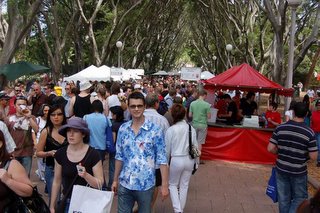
Fig Tree Avenue with stalls thankfully staggered this year after the previous crushes!

Never forgetting the tragedy that brings us all together to support those surviving with HIV AIDS in our community.

The Elizabeth Street lawns became a man made and natural art festival. Worthy of two uploads even if by mistake!!

Was the Cardinal home? The vista now opened by Clover's latest fig tree cull.

The famous Achibald Fountain in the very centre of Hyde Park became a wonderful outdoor cafe experience on a very Sydney early summer day.
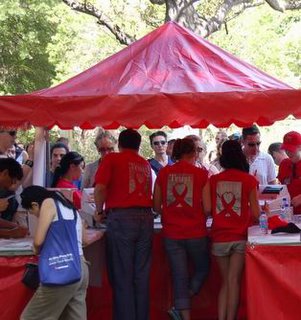
The AIDS Trust volunteers. Well done to you all!

And the homeless of Hyde Park slept just out of sight and oblivious to the goings on.
.
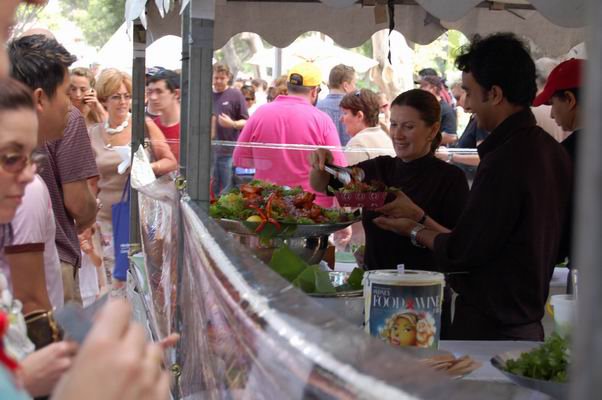
Plenty of food from Sydney's finest food establishments. All food and time donated with stalls asked to supply 300 servings. The punters used pre-purchased coupons to pick up a great dish and some fine wines all for a great cause.

Fig Tree Avenue with stalls thankfully staggered this year after the previous crushes!

Never forgetting the tragedy that brings us all together to support those surviving with HIV AIDS in our community.
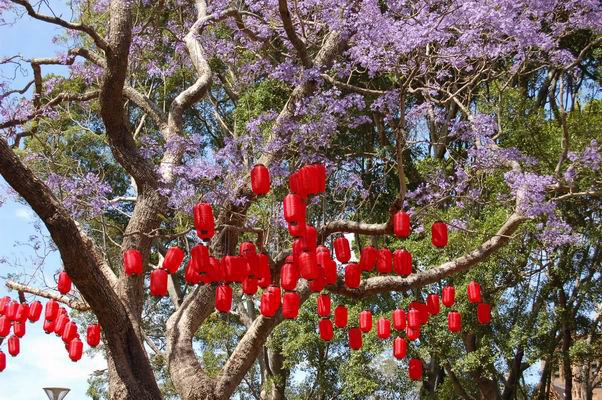
The Elizabeth Street lawns became a man made and natural art festival. Worthy of two uploads even if by mistake!!
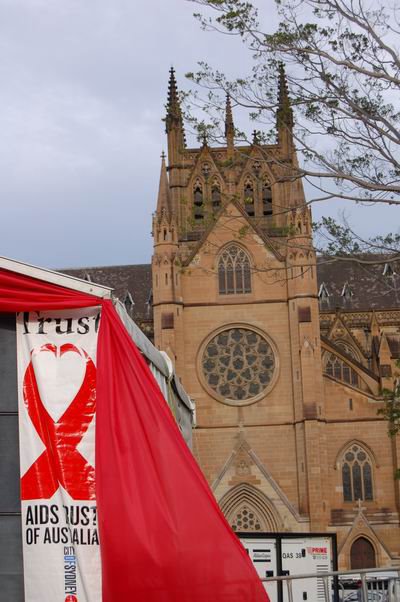
Was the Cardinal home? The vista now opened by Clover's latest fig tree cull.
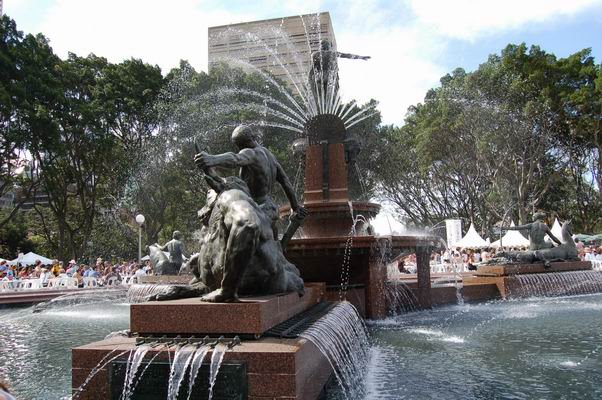
The famous Achibald Fountain in the very centre of Hyde Park became a wonderful outdoor cafe experience on a very Sydney early summer day.
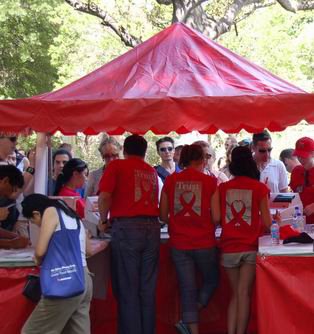
The AIDS Trust volunteers. Well done to you all!
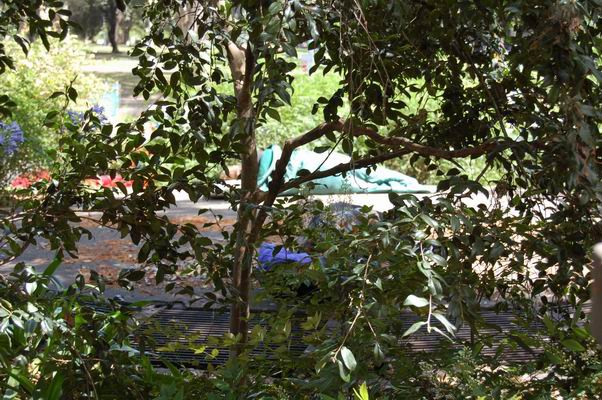
And the homeless of Hyde Park slept just out of sight and oblivious to the goings on.
.
Friday, November 04, 2005
Edmund Burke wrote:
 Certainly…it ought to be the happiness and the glory of a representative to live in the strictest union, the closest correspondence, and the utmost unreserved communication with his constituents. Their wishes ought to have great weight with him; their opinions high respect; their business unremitted attention. It is his duty to sacrifice his repose, his pleasure, his satisfactions to theirs-and above all, and in all cases, to prefer their interests to his own. But his unbiased opinion, his mature judgement, his enlightenment and conscience, he ought not to sacrifice to you or to any man, or any set of living men. These he does not derive from your pleasure-no, nor from the law and the constitution. They are trust from Providence, for the abuse of which he is deeply answerable.
 Your representative owes you not his industry only, but his judgement: and he betrays, instead of serving you, if he sacrifices it to your opinion.
Wednesday, November 02, 2005
East Sydney street closures
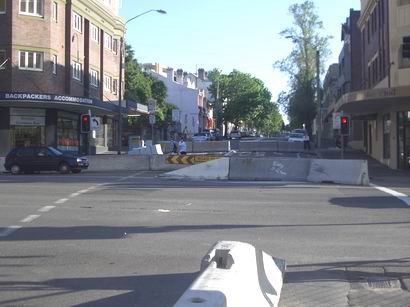 Council on Monday night dealt with many difficult issues from a controversial new Chicken shop application in the Rex building Kings Cross (deferred for more consideration but opposed by myself on behalf of 60 local residents) to the final design and tender for the Redfern Street upgrade. I blogged on the latter earlier and will update on the positive outcome another time.
 But along with dozens of bouquets comes the occasional disgruntled constituent. Green Councillor Chris Harris has consistently driven political wedges into Clover Moore's local community support base by cleverly exploiting the opposition to some of the street closures in East Sydney. A Green that supports more fossil fuel burning cars on inner city streets seems a contradiction. The Greens clearly have an agenda to turn Bligh (now Sydney) into another Marrickville or Port Jackson with a long odds Green opening and see pulling their Green supporters away from Clover Moore as their only chance. Councillor Harris has already announced his Green candidacy for the seat in 2007 and is feverishly at work.
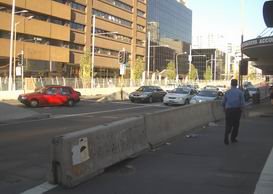 When I spoke on this issue on Monday night I commented that it must be the 100th time I have spoken about East Sydney traffic management. The future of street closures and traffic changes in East Sydney is a vexed and contentious issue. Linked with the emotion and anger about the secret Cross City Tunnel contract and related traffic changes the issue is another local political hot potato! Harris had moved the motion that 'Council resolves that the Lord Mayor intervene on behalf of residents and businesses in East Sydney to call on the RTA to re-open Bourke Street at William Street immediately.'
 The debate that ensued reminded us that the trial closure of Bourke Street at William Street was a direct result of the Woolloomooloo community concerns regarding the RTA's proposed 'G' loop directing west bound William Street traffic seeking to enter the Eastern Distributor ramp on Bourke street around the block through residential streets of Woolloomooloo. This was unacceptable to the local residents. Four solutions were proposed. The one most favoured by residents, businesses and motorists was a right hand turn from William into Bourke Street (north) and direct entry to the ED ramp. However the RTA advised that this was only possible with the closure of Bourke Street south in order to maintain traffic flows and reduce waiting times at the lights. It also eliminated two pedestrian crossings thus improving road safety.
I attended the public meetings over the past two years to debate the options and they overwhelmingly endorsed this proposal. It was then implemented on a six month trial basis. Council subsequently resolved to monitor the current street closures and traffic activity for a six month period and to have the results assessed and reported back to Council for further consultation and implementation of a traffic management plan. A process nearly half completed.
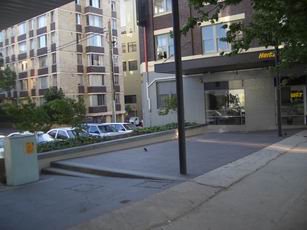 I was lobbied by some to immediately reopen the Bourke Street trial closure. Something not in my power to deliver. I indicated I was open minded on the Harris motion and would hear the debate. That has since been misrepresented as my agreeing to support the Harris motion. I was also lobbied by local residents and businesses to support the trial closure. Respected planning expert and city Councillor John McInerney moved the following amendment which replaced the Harris motion:
Council Notes that:
(A) following consultation in response to overwhelming community opposition to “G-Loop” access to the Eastern Distributor around Palmer, Cathedral and Bourke Streets Woolloomooloo, the Roads and Traffic Authority (RTA) proposed a trial closure of Bourke Street south of William Street to enable direct right-turn access to the Eastern Distributor from William Street;
(B) the Minister for PlanningÂ’s approval for the closure of Bourke Street south of William Street is for a trial only, with the RTA to monitor the change and undertake a formal review six months after the closure is implemented;
(C) the RTA and Council have commenced traffic studies to monitor the impacts of the Cross City Tunnel, including the Bourke Street closure; and
resolves to continue work with the RTA to assess the impact of all Cross City Tunnel traffic changes, including the Bourke Street closure, to achieve an equitable outcome for local residents and businesses that addresses traffic congestion and displaced traffic due to the Cross City Tunnel.
 The motion explains the process adopted by Council after community participation. I supported the alternate motibecause believeive a trial is a trial and Council needs more facts to make informed and appropriate decisions. When I spoke on the motion I indicated that I approach this trial totally open minded and I am totally prepared to have Bourke Street re-opened if the information we collate indicates this is the right thing to do. However there are also strong advocates for retaining the closure.
 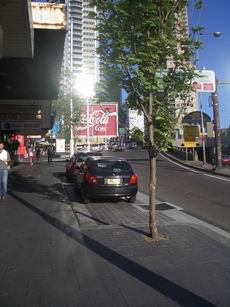 As a Councillor on South Sydney City Council directly elected by the East Sydney community and having run a local retail business and lived in the suburb for several years I am well aware of the issues and emotions surrounding street closures. For many years residents and SCEGGS school campaigned for limited closures to protect the school and residential streets from the devastating impact of street prostitution and related kerb crawlers.
The member for Bligh and the local police commander at the time strongly backed our decision to close Forbes Street at St Peter's Lane and St Peter's Street. The benefits of that closure have been sustained and appreciated by local residents but continue to be strongly opposed by advocates of so called sex industry rights. Their hard left political agenda is at play on this issue as well.
The right time to determine the future traffic managementent in East Sydney is after the six month traffic study and when the CCT has bedded down and the William and Oxford Street upgrades are completed - for better of worse. Only then will we be in a position to make long term and logicdecisionsons. Until then knee-jerk changes in direction will only compound the confusion and problems.
Images top to bottom:
1. Concrete barriers at trial Bourke Street south closure.
2. From closure looking east on William - note red car making right turn into ED ramp lane a pedestrian safely crossing closed street.
3. Not all street closures were invented by Clover Moor - Riley Street closure at least 20 years old. Creates pleasant plaza.
4. Pedestrians on William street will have more enjoyable walk with wider footpaths and new trees.
5. Kerb side parking bays will be installed all along William Street to benefit local businesses.
Thursday, October 27, 2005
Weekend Pics - Mudgee roses
It appears some Councillors (2 of 500) were caught at the pub rather than at the Local government conference during their lunch break... - this Councillor could have been sprung photographing roses in the early morning!! - but that does not make good Today Tonight images! or was that Frontline...)

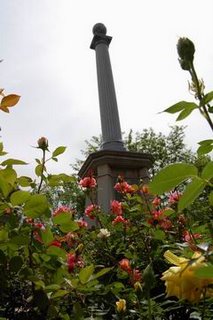
Roses abundant - at war memorial - Boer to Vietnam. Very impressive.
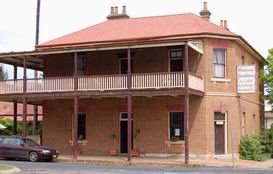
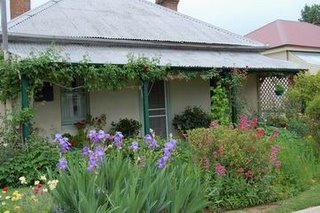
Mudgee garden cottages - very Laura Ashley.
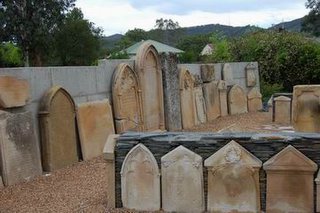
Gravestones - at least 80 years old, relocated to a remote corner to create a new park from the old burial ground. A bit modern day disposable society?
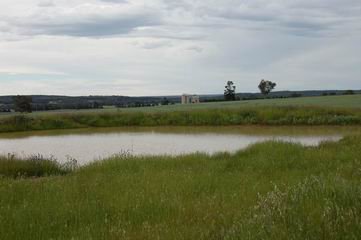
The trip from Mudgee to Dubbo. Green and allergy filled. Good bye and good riddance to the drought..
Friday, October 21, 2005
Libs vote to support Aboriginal future for the Block


MEDIA RELEASE
Local Liberals call for Aboriginal future in the Block
Three key local Liberal party branches have voted unanimously to support an Aboriginal future for the Block in Redfern.
At a meeting held this week the Darlinghurst/Surry Hills, East Sydney and Elizabeth Bay branches unanimously supported a motion moved by City of Sydney Liberal Councillor Shayne Mallard calling on the State Government to allow the local Aboriginal community to determine the future of the Block. The motion was seconded by Redfern community leader Ian Thompson and followed a presentation and debate about the governments plans for the area.
The motion reads: "The local Liberal party branches support in principle the Aboriginal Housing Company proposal for redeveloping the Block and call upon the State government to allow the local Aboriginal community to determine the future of the Block."
The motion concludes by calling on the Minister responsible for the Redfern Waterloo Authority, Frank Sartor to resign "after the irreconcilable breakdown in communication and respect." Referring to Frank Sartor's racist slur on Aboriginal community leader Mick Mundine, Councillor Shayne Mallard said:
"The minister has demonstrated yet again that he is not prepared to listen or treat people with the respect they deserve. How can the Redfern Aboriginal community sit down and negotiate with the Minister when there is a break down in respect and trust?"
The local Liberal party members heard from guest speakers Mr Michael Mundine, CEO Aboriginal Housing Company and Mr Peter Valilis Project Director for the AHC Pemulwuy Project. Both men outlined their vision for the Block including plans for an Aboriginal cultural centre, training college and commercial areas. Importantly the redevelopment will include new housing for the inner city Aboriginal community.
In response to a question from Shayne Mallard regarding the social and crime problems over the past decade, Mick Mundine explained that a mixture of private home ownership and renewed community focus would work to prevent a repeat of the past problems.
Legislative Council Parliamentarian Mr Greg Pearce, Shadow Minister for Infrastructure and Finance also addressed the meeting. Mr Pearce was instrumental in the Parliamentary Inquiry following the Redfern riots. He explained that the NSW Liberal Leader Mr Peter Debnam was backing the right for Aboriginal people to determine the future of their land and pointed out that the government has had no real answers to the social disadvantage and problems in the Block.
Shayne Mallard pointed out the positive and community empowering role the Redfern Community Centre was playing in the Block and that it was a good example of what can be achieved if people work in partnership with mutual respect.
For more information on the AHC Pemulwuy Project visit www.ahc.org.au/redevelop/redevelop.html
RELEASE ENDS
21 October 2005
Tuesday, October 18, 2005
Dansk Opera Houses and Tassie Devils
eCouncillor's father is Tasmanian so I can cringe at this gift giving (see below) without feeling oppressive of the sensitive Tasmanian rights!
But what should Sydney be giving to Denmark? Maybe the Slip Inn? (please) or perhaps our Lord Mayor? (no lets not antagonise the Vikings). But maybe our/their Opera House would be more appreciated than the controversy surrounding the just opened Danish Beer Barrel (the new Danish Opera House) with a carport on top.


Which Opera House is Danish designed and in Sydney? Which is Danish designed in Copenhagen? This is one occassion where Sydney trumps the Danes.
From Denmark DK official news site of the Danish government.
 Tasmania gives devils, spoons and socks as gifts Tasmanian devils might be one of the more unusual presents given in connection with the birth of Denmark's new prince. Mary Donaldson's home state Tasmania will be donating two of the rare animals
Peter Parks/AFP/Scanpix
A file photo of a Tasmanian devil at wild life reserve on Tasmania.
When looking for a uniquely Tasmanian gift to celebrate the birth of the royal couple's child, Premier Paul Lennon chose to donate a pair of Tasmanian devils to Copenhagen Zoo.
'In connection with the royal birth, we wanted to show the Danish people something which is completely unique for Tasmania,' said Lennon.
The present was gratefully accepted by the head of Copenhagen Zoo, Lars Lunding Andersen.
The animal, which was immortalised in the Warner Brothers cartoon series Looney Toons, is extremely rare in the wild.
Andersen hoped that the devils would mate and add to the population.
'Luckily, we have contact with one of our former animal attendants who moved to Australia several years ago. We expect to be able to seek advice with him,' he said.
The devils typically only grow to be the size of a large cat but derive their name from their powerful jaws and vicious growl that is typically emitted after sundown - characteristics which might cause a moment of unease for the proud parents.
It is still unknown when the Tasmanian devils will swoop into Copenhagen Zoo, where they will be neighbours to other Australian natives such as kangaroos and emus.
Other gifts from Tasmania included a spoon made from a combination of amber, which is common in Denmark, and krokoite, a typical Tasmanian mineral.
In addition, newborn babies born in Tasmania on the same day as the little prince received a pair of suede socks like those Mary and Frederik looked at for their child on their last visit to the island.
A major celebration is also planned with a bonfire and fireworks to take place on Hobart's harbour.
But what should Sydney be giving to Denmark? Maybe the Slip Inn? (please) or perhaps our Lord Mayor? (no lets not antagonise the Vikings). But maybe our/their Opera House would be more appreciated than the controversy surrounding the just opened Danish Beer Barrel (the new Danish Opera House) with a carport on top.
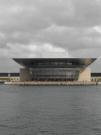

Which Opera House is Danish designed and in Sydney? Which is Danish designed in Copenhagen? This is one occassion where Sydney trumps the Danes.
From Denmark DK official news site of the Danish government.
 Tasmania gives devils, spoons and socks as gifts Tasmanian devils might be one of the more unusual presents given in connection with the birth of Denmark's new prince. Mary Donaldson's home state Tasmania will be donating two of the rare animals
Peter Parks/AFP/Scanpix
A file photo of a Tasmanian devil at wild life reserve on Tasmania.
When looking for a uniquely Tasmanian gift to celebrate the birth of the royal couple's child, Premier Paul Lennon chose to donate a pair of Tasmanian devils to Copenhagen Zoo.
'In connection with the royal birth, we wanted to show the Danish people something which is completely unique for Tasmania,' said Lennon.
The present was gratefully accepted by the head of Copenhagen Zoo, Lars Lunding Andersen.
The animal, which was immortalised in the Warner Brothers cartoon series Looney Toons, is extremely rare in the wild.
Andersen hoped that the devils would mate and add to the population.
'Luckily, we have contact with one of our former animal attendants who moved to Australia several years ago. We expect to be able to seek advice with him,' he said.
The devils typically only grow to be the size of a large cat but derive their name from their powerful jaws and vicious growl that is typically emitted after sundown - characteristics which might cause a moment of unease for the proud parents.
It is still unknown when the Tasmanian devils will swoop into Copenhagen Zoo, where they will be neighbours to other Australian natives such as kangaroos and emus.
Other gifts from Tasmania included a spoon made from a combination of amber, which is common in Denmark, and krokoite, a typical Tasmanian mineral.
In addition, newborn babies born in Tasmania on the same day as the little prince received a pair of suede socks like those Mary and Frederik looked at for their child on their last visit to the island.
A major celebration is also planned with a bonfire and fireworks to take place on Hobart's harbour.
Sunday, October 16, 2005
Australian Princess - have our Cross City Tunnel too
 While Denmark celebrates a new prince
 Papa meets the press
A beaming Crown Prince Frederik talks to the press about the birth of his first son
The City of Cyclists still has to contend with strong growth in car ownership and increasing traffic in Copenhagen. Talk of a huge traffic tunnel under Copenhagen Harbour is linked with ongoing real commitments to public transport. Perhaps Sydney and the RTA can be consultants on how not to develop a new tunnel system ie Sydney's Cross City Tunnel fiasco.
Standstill predicted for tunnel-less Copenhagen An underwater city bypass is proposed as a way to keep Copenhagen's traffic flowing
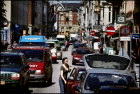
Traffic in the city of Copenhagen
Without an underwater bypass under Copenhagen Harbour, the city's traffic - and its development - will grind to a halt, according to a new report.
'What we need is visions if we are going to see more growth in the city. Copenhagen needs a harbour tunnel that will be able to direct traffic away from the city,' said Flemming Borreskov, CEO of the Realdania Foundation, which supports public building projects.
The foundation's report proposes constructing a four lane, 12 km tunnel. If construction begins by 2007, the tunnel would be open for traffic in 2017.
The tunnel is expected to cost DKK 18 billion (EUR 2.4 billion) and would be paid for by charging a toll on the estimated 500,000 cars that would pass through the tunnel daily.
For Borreskov, the traffic through the tunnel would mean welcome reduction of traffic on city streets.
Borreskov said that even with planned expansions of public transportation networks, the city still needs to address how to deal with increasing automobile traffic.
'The construction of a circle line, extension of the Metro, and highway widenings are only a half solution if traffic is to keep moving,' he said.
According to the predictions, traffic in Copenhagen is expected to increase by up to 40 percent in the next 40 years and the current infrastructure is expected to buckle under the increase.
Building the tunnel might increase congestion at entry points, but for Peter Lundhus, CEO of Sund & Bælt, the operator of two of Denmark's largest bridges, it is a necessary evil.
'If we don't build the harbour tunnel, congestion on the other roads will grow and create even more traffic in the city,' Lund said.
/ritzau/
Thursday, October 13, 2005
Redfern Street bike lanes under threat
 Council's multi million dollar granite-fication of the suburbs continues with the plans for the upgrade of the Redfern 'village' well advanced. The Council's project web site promises:
The Redfern Street Upgrade project aims to provide a more vibrant, active and safe public domain through the implementation of urban design improvements. The upgrade will deliver better visual amenity, enlivened retail activity and a pedestrian/bicycle friendly environment. The works will also create a strong and clear streetscape identity and reclaim Redfern Street as the backbone of Redfern.
Scope: The original scope of the works was Redfern Street, from Regent to Elizabeth Street. However, the project scope has been extended to include the expansion of Jack Floyd Reserve and some localised works for Regent Street.(see Council's plans here).
Just when you think that the City's attitude to providing equitable and genuine bike riding facilities had turned the corner after the debacle on Oxford and William Streets (read about them here) we are yet again confronted with the attitude that when something has to be given up its the bike facilities that go! This time the bike user groups and the Councillors that support them (including this one) have worked hard to protect the inclusion of bike facilities in this upgrade to one of Sydney's most bike friendly communities. We have already accepted a compromise on bike lanes. The compromise agreed to is the provision of a dedicated bike lane on one side only (that being between parked cars and traffic) and the combination of traffic and bike lane on the other. The lesson here for negotiators is not to make any compromises too early because you are immediately tagged in a weak position for future negotiations.
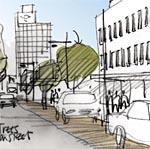 Late last week news spread fast amongst the bike community that Council staff had revised the upgrade plans and had decided to recommend the scrapping of bike lanes altogether and the transfer of bike routes off Redfern Street and onto two parallel side lanes. This is apparently to enable a further widening of the footpaths by approximately 60cm (excuse the general nature of the information but no written reports have been provided). This is on a street where pedestrians fear to venture and shop keepers use roller shutters to protect their investments.
Council yet again fails to acknowledge the benefits that bike users bring to a streetscape. We all acknowledge the benefits do not happen overnight but as facilities and networks develop and grow and community attitudes change we will see the economic, social, health and environmental benefits accrue. The promised benefits of any streetscape upgrade are slow to develop. For example the Darlinghurst Road upgrade (without bike lanes) has not kick started the great urban revival as promised. Oxford Street will be anoter slow recovery.
A reminder on the opportunities and benefits that bike lanes and facilities will provide for Redfern Street:
- Bike facilities should be treated with equity with other transport facilities eg pedestrians, cars, public transport.
- Bike facilities should not be hidden from mainstream routes and public view as their presence and growing use help to further promote sustainable and active transport options.
- Studies show that bike lanes and users are highly beneficial for local businesses.
- Bike lanes and users help to reduce social isolation and add to passive surveillance and street safety.
- Bike lanes and users add to community fitness, health and help reduce early mortality.
- Bike lanes and users encourage children to be more fit and active and help create safer streets for them to live on - even if they do not ride a bike.
- Bike lanes reduce exhaust emissions and pollution levels and therefore make the streetscape more pleasant and healthy for all users.
Councillors were briefed on the proposed changes on Monday afternoon. Two Councillors, myself and Chris Harris spoke out against the changes citing the arguments outlined above. Staff insisted that the changes were still providing facilities and options for bike users. It was the pea and shell argument. They could ride in the traffic on Redfern Street or if less confident take the side lanes along with the garbage trucks and laneway refuse. It seemed that some staff and Councillors were putting the case that it was bike lanes or trees, bike lanes or pedestrian space. The outcome is that staff will come back to the Councillors with options and more detailed assessment of the proposals.
Bike riders and user groups should continue to strongly lobby the Councillors to oppose the amendment to move bike lanes and facilities from Redfern street to side lanes.
email your Councillors:
Clover Moore mailto:cmoore@cityofsydney.nsw.gov.au
John McInerney mailto:jmcinerney@cityofsydney.nsw.gov.au
Marcelle Hoff mailto:mhoff@cityofsydney.nsw.gov.au
Robyn Kemmis mailto:rkemmis@cityofsydney.nsw.gov.au
Phillip Black mailto:pblack@cityofsydney.nsw.gov.au
Michael Lee mailto:mlee@cityofsydney.nsw.gov.au
Tony Pooley mailto:tpooley@cityofsydney.nsw.gov.au
Verity Firth mailto:vfirth@cityofsydney.nsw.gov.au
Chris Harris (supportive) mailto:charris@cityofsydney.nsw.gov.au
Shayne Mallard (supportive and copy) mailto:smallard@cityofsydney.nsw.gov.au
Come along to the public meeting to discuss the upgrade:
Community Meeting
Redfern and Regent Street Upgrade
Wednesday 2 November 20056pm – 7.30pm
Redfern Town Hall73 Pitt Street, Redfern
Wednesday, October 12, 2005
More on Human Rights Act
New Matilda has a report on the launch for a Human Right's Act for Australia with good photographs.
A Human Rights Act for Australia Campaign Launch
Wednesday 12 October 2005
Adam Hochroth
The launch of New Matilda's campaign for a Human Rights Act for Australia on 5 October 2005 was privileged to be addressed by ten distinguished speakers. Appropriately, in their discussions of universal human rights, the speakers brought with them different narratives, backgrounds and perspectives, yet ultimately they were unified by themes and ideas.
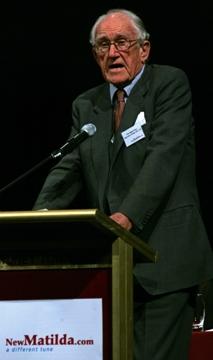
Elizabeth Evatt and Malcolm FraserA number of speakers, including Waleed Aly and Greg Combet, spoke of the role of a Human Rights Act as a reflection of Australian values. These values were outlined by Professor Spencer Zifcak as primarily those of egalitarianism, fairness, democracy, and freedom. A Human Rights Act would enshrine such values into law, and in so doing, would provide the legally enforceable counterparts to such moral values. However, the effect of the Act would go beyond the mere creation of legal rights and remedies. The Act would also affirm and proclaim those same values in a particularly meaningful way.It seems appropriate that the law should reflect our values. In this vein, a number of speakers, including Professor Larissa Behrendt (link here ), spoke of the need for a Human Rights Act to make Australia a decent society, or ‘the best society that we can be.' If the law exists to regulate the affairs of persons in a society, how can anyone argue that the law should not reflect the values of that society? Why should Australian law not uphold the decency of Australian society?
Read more here. (Pictures souced New Matilda)

Thursday, October 06, 2005
Launch of Campaign for Human Rights Act for Australia
Tonight I attended the launch of a campaign to pass legislation in Australia for a Human Rights Act. I have always been sympathetic to the call for a Bill of Rights or some form of Human Rights Act for Australia. We are probably the last western democracy without some form of human rights protection. It's no reflection on the current government but more that the times in which we live are a reminder that we must safeguard human rights against the potential of excess and tyranny.
When I was first elected to the City of Sydney Council I was alarmed to read that the Lord Mayor had the power conferred by Council under voted delegation to enter any office and access any file in the organisation - not specified but obviously including Councillors. I found it interesting to watch as the Town Hall bureaucrats keen to defend that Lord Mayoral authority (and by default their powers) - no doubt another Sartor legacy. I opposed the powers in numerous early meetings and in response Clover Moore initially said 'I can assure you Councilor Mallard that I have no interest in reading your files'. I responded that it was not her benevolent administration that I feared (not) but rather the potential for future abuse by power drunk bureaucracies and their tyrant masters. Moore deleted the power wholesale the following Council meeting. When it comes to civil liberties I believe it is one occasion when we should take as the base line the worst nature of ourselves. And so we have today the unfashionable call for a Human Rights Act for Australia.
The launch of the campaign by New Matilda - a left of centre on-line publication - was at the Town Hall tonight. Nine worthy speakers presented their case in support of Parliament embracing the Human Rights Act they were putting up for consultation and debate. The speakers were all very good - even Greg Combet impressed me - although I cautioned moderator and friend Susan Ryan AO not to let the trade union dig its claws in too deep if she really wanted to see this Act passed by the parliament. I was probably the only Liberal party member there since last I heard the Young Liberals had called for Malcolm Fraser to be expelled or hand back his life membership for being too liberal! I read today that the Victorian Young Liberals believe that no one left of them should be in the Liberal party. They do forget Menzies own words about why it is called the Liberal party and not the Conservative party. But I digress.
Malcolm Fraser spoke very forcefully and with his much admired passion. Susan Ryan introduced him as one of the major forces and personalities in ending apartheid. John Menadue acknowledged Malcolm for accepting 100,000 Indo-Chinese refuges as prime minister without referral to opinion polls but rather because it was right to do so. Strong applause from the Town Hall audience.
Fraser outlined his support for the Human Rights Act by starting from the point that he had always thought common law protected our basic freedoms in Australia, but that events in the last five years had proven him wrong: Events like the mandatory detention of children and the wrongful deportation of a mentally ill Australian citizen. Human Rights are not proetcted by laws or the constitution in Australia. He was most concerned about the current proposed anti-terror laws endorsed by the labor State Premiers last week and allowing the detention by the executive on the advise of ASIO for 14 days of people suspected of having some knowledge of terrorist activity. Fraser contended that with the limited access for those subject to the Orwellian detention orders to inform family or lawyers that the Federal government effectively had the power to make even Malcolm Fraser disappear. And a journalist who dared report it faced 5 years in goal. He quoted Churchill who faced a much more serious threat from Nazism than we do from terror, when he said that 'executive detention of citizens is an odious power that should be surrendered at the earliest possible occasion.'
I heard from other speakers such as the inspirational Waleed Aly, a Melbourne lawyer and member of the Islamic Council of Victorian who whilst paying respect and support to the victims of the latest Bali atrocity, made the sensitive point that after such a terrorist attack the 'discourse on human rights becomes unfashionable'. More reason to have the discourse.
The Bill's main architect associate Professor Spencer Zifcak unwrapped the draft legislation in detail. He and others explained that this was a very conservative Human Rights Act that drew its basis from the recently adopted UK Bill of Rights. It provided little opportunity for judicial activism or lawyer enrichment.
By the end of the night my conviction that it is time for Australia to adopt some form of Human Rights charter was reinforced. I approached the organiser, Susan Ryan and remind her that to succeed this campaign must be bi-partisan. I intend to ask City of Sydney Council to adopt the draft Human Rights Act for Australia and seek public comment as part of the consultation process. I also intend pursuing it within the Liberal party forums and network available to me.
After several weeks of sadness and disappointment at where politics is heading today (re John Brogden and Mark Latham events) I left tonight's event feeling re-energised.
Off to Brisbane at 635am tomorrow to present two papers at the Bicycle Federation of Australia Conference and back to blog on the weekend.
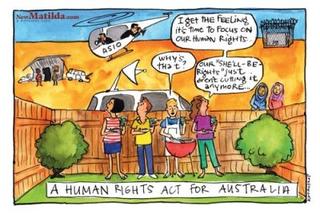
Australia is the only Western country without a national Human Rights Act. New Matilda will launch its Human Rights Act campaign in October to change this.
NATIONAL LAUNCH OF HUMAN RIGHTS ACT CAMPAIGN
The Right Honourable Malcolm Fraser will be launching the Human Rights Act for Australia Campaign.
When: Wednesday 5 October 2005. Time: 6.15pm
Venue: Sydney Town Hall
Speakers include: The Right Honourable Malcolm Fraser, Professor Larissa Behrendt, Waleed Aly, Associate Professor Spencer Zifcak, Greg Combet, Nahid Karimi, Susan Ryan AO and John Menadue AO.
A Human Rights Act for Australia
Susan Ryan
An Australian Human Rights Act cannot be put off any longer.New Matilda readers are all too aware of recent erosions of our rights. The anti terrorism laws should never have been enacted without stronger protections for individuals. Shocked as we are by the sagas of despair coming out of mandatory detention, or wrongful treatment by immigration agencies of citizens and asylum seekers, these sagas continue, apparently with official sanction. Read more here.
The New Matilda Campaign, article by Nick Carney
Friday 30 September 2005
Nick Carney
In January this year, two comments were posted in response to an article in New Matilda entitled 'No Way Out: the High Court and Children in Detention'. The article was one of many that focused on the Federal Government's inhumane policy of mandatory detention for children of asylum seekers. The author, Spencer Zifcak, considered two then-recent proceedings in which the High Court of Australia had found that the 'Commonwealth Government (had) the constitutional and statutory authority to detain children mandatorily - even for years.'Zifcak, although appalled by the practice, agreed that the court's conclusions 'were clearly right.' How could this be? The highest court in the land powerless to stop the Federal Government from locking up children behind razor wire?Zifcak's answer was that Australia's Constitution affords very limited protection for human rights. Our international human rights obligations (which derive from various international covenants, to which we have been a signatory since 1966) have never been incorporated into domestic law - so they have no effect! Without constitutional or statutory protection for human rights, the Australian people must trust the parliament to make laws for the good governance of the country and have no recourse if it does not.
Myths about a Human Rights Act
Friday 16 September 2005
A Human Rights Act would erode parliamentary sovereignty
Parliamentary sovereignty refers to the fundamental power of the parliament to make laws for the governance of Australia. New Matilda recognises the importance of parliamentary sovereignty. That is why it is proposing a statutory rather than constitutional model for the protection of rights. The statutory model encourages rights protection through dialogue between the courts and parliament without taking power away from the parliament. The courts will be able to declare that laws are incompatible with human rights but the final decision on what to do about the incompatibility will remain with the government and the parliament.
A Human Rights Act only protects terrorists, criminals and refugees
A Human Rights Act would protect the rights of all people within Australia. Read more here.
When I was first elected to the City of Sydney Council I was alarmed to read that the Lord Mayor had the power conferred by Council under voted delegation to enter any office and access any file in the organisation - not specified but obviously including Councillors. I found it interesting to watch as the Town Hall bureaucrats keen to defend that Lord Mayoral authority (and by default their powers) - no doubt another Sartor legacy. I opposed the powers in numerous early meetings and in response Clover Moore initially said 'I can assure you Councilor Mallard that I have no interest in reading your files'. I responded that it was not her benevolent administration that I feared (not) but rather the potential for future abuse by power drunk bureaucracies and their tyrant masters. Moore deleted the power wholesale the following Council meeting. When it comes to civil liberties I believe it is one occasion when we should take as the base line the worst nature of ourselves. And so we have today the unfashionable call for a Human Rights Act for Australia.
The launch of the campaign by New Matilda - a left of centre on-line publication - was at the Town Hall tonight. Nine worthy speakers presented their case in support of Parliament embracing the Human Rights Act they were putting up for consultation and debate. The speakers were all very good - even Greg Combet impressed me - although I cautioned moderator and friend Susan Ryan AO not to let the trade union dig its claws in too deep if she really wanted to see this Act passed by the parliament. I was probably the only Liberal party member there since last I heard the Young Liberals had called for Malcolm Fraser to be expelled or hand back his life membership for being too liberal! I read today that the Victorian Young Liberals believe that no one left of them should be in the Liberal party. They do forget Menzies own words about why it is called the Liberal party and not the Conservative party. But I digress.
Malcolm Fraser spoke very forcefully and with his much admired passion. Susan Ryan introduced him as one of the major forces and personalities in ending apartheid. John Menadue acknowledged Malcolm for accepting 100,000 Indo-Chinese refuges as prime minister without referral to opinion polls but rather because it was right to do so. Strong applause from the Town Hall audience.
Fraser outlined his support for the Human Rights Act by starting from the point that he had always thought common law protected our basic freedoms in Australia, but that events in the last five years had proven him wrong: Events like the mandatory detention of children and the wrongful deportation of a mentally ill Australian citizen. Human Rights are not proetcted by laws or the constitution in Australia. He was most concerned about the current proposed anti-terror laws endorsed by the labor State Premiers last week and allowing the detention by the executive on the advise of ASIO for 14 days of people suspected of having some knowledge of terrorist activity. Fraser contended that with the limited access for those subject to the Orwellian detention orders to inform family or lawyers that the Federal government effectively had the power to make even Malcolm Fraser disappear. And a journalist who dared report it faced 5 years in goal. He quoted Churchill who faced a much more serious threat from Nazism than we do from terror, when he said that 'executive detention of citizens is an odious power that should be surrendered at the earliest possible occasion.'
I heard from other speakers such as the inspirational Waleed Aly, a Melbourne lawyer and member of the Islamic Council of Victorian who whilst paying respect and support to the victims of the latest Bali atrocity, made the sensitive point that after such a terrorist attack the 'discourse on human rights becomes unfashionable'. More reason to have the discourse.
The Bill's main architect associate Professor Spencer Zifcak unwrapped the draft legislation in detail. He and others explained that this was a very conservative Human Rights Act that drew its basis from the recently adopted UK Bill of Rights. It provided little opportunity for judicial activism or lawyer enrichment.
By the end of the night my conviction that it is time for Australia to adopt some form of Human Rights charter was reinforced. I approached the organiser, Susan Ryan and remind her that to succeed this campaign must be bi-partisan. I intend to ask City of Sydney Council to adopt the draft Human Rights Act for Australia and seek public comment as part of the consultation process. I also intend pursuing it within the Liberal party forums and network available to me.
After several weeks of sadness and disappointment at where politics is heading today (re John Brogden and Mark Latham events) I left tonight's event feeling re-energised.
Off to Brisbane at 635am tomorrow to present two papers at the Bicycle Federation of Australia Conference and back to blog on the weekend.

Australia is the only Western country without a national Human Rights Act. New Matilda will launch its Human Rights Act campaign in October to change this.
NATIONAL LAUNCH OF HUMAN RIGHTS ACT CAMPAIGN
The Right Honourable Malcolm Fraser will be launching the Human Rights Act for Australia Campaign.
When: Wednesday 5 October 2005. Time: 6.15pm
Venue: Sydney Town Hall
Speakers include: The Right Honourable Malcolm Fraser, Professor Larissa Behrendt, Waleed Aly, Associate Professor Spencer Zifcak, Greg Combet, Nahid Karimi, Susan Ryan AO and John Menadue AO.
A Human Rights Act for Australia
Susan Ryan
An Australian Human Rights Act cannot be put off any longer.New Matilda readers are all too aware of recent erosions of our rights. The anti terrorism laws should never have been enacted without stronger protections for individuals. Shocked as we are by the sagas of despair coming out of mandatory detention, or wrongful treatment by immigration agencies of citizens and asylum seekers, these sagas continue, apparently with official sanction. Read more here.
The New Matilda Campaign, article by Nick Carney
Friday 30 September 2005
Nick Carney
In January this year, two comments were posted in response to an article in New Matilda entitled 'No Way Out: the High Court and Children in Detention'. The article was one of many that focused on the Federal Government's inhumane policy of mandatory detention for children of asylum seekers. The author, Spencer Zifcak, considered two then-recent proceedings in which the High Court of Australia had found that the 'Commonwealth Government (had) the constitutional and statutory authority to detain children mandatorily - even for years.'Zifcak, although appalled by the practice, agreed that the court's conclusions 'were clearly right.' How could this be? The highest court in the land powerless to stop the Federal Government from locking up children behind razor wire?Zifcak's answer was that Australia's Constitution affords very limited protection for human rights. Our international human rights obligations (which derive from various international covenants, to which we have been a signatory since 1966) have never been incorporated into domestic law - so they have no effect! Without constitutional or statutory protection for human rights, the Australian people must trust the parliament to make laws for the good governance of the country and have no recourse if it does not.
Myths about a Human Rights Act
Friday 16 September 2005
A Human Rights Act would erode parliamentary sovereignty
Parliamentary sovereignty refers to the fundamental power of the parliament to make laws for the governance of Australia. New Matilda recognises the importance of parliamentary sovereignty. That is why it is proposing a statutory rather than constitutional model for the protection of rights. The statutory model encourages rights protection through dialogue between the courts and parliament without taking power away from the parliament. The courts will be able to declare that laws are incompatible with human rights but the final decision on what to do about the incompatibility will remain with the government and the parliament.
A Human Rights Act only protects terrorists, criminals and refugees
A Human Rights Act would protect the rights of all people within Australia. Read more here.
Subscribe to:
Posts (Atom)