Thursday, October 27, 2005

Weekend Pics - Mudgee roses

It appears some Councillors (2 of 500) were caught at the pub rather than at the Local government conference during their lunch break... - this Councillor could have been sprung photographing roses in the early morning!! - but that does not make good Today Tonight images! or was that Frontline...)


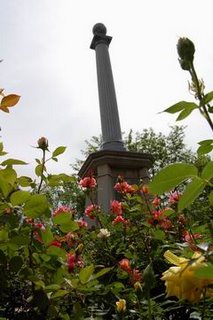
Roses abundant - at war memorial - Boer to Vietnam. Very impressive.


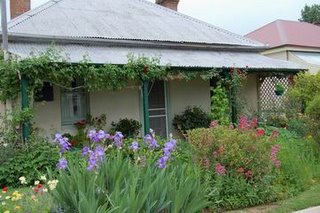
Mudgee garden cottages - very Laura Ashley.


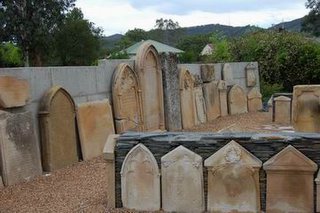
Gravestones - at least 80 years old, relocated to a remote corner to create a new park from the old burial ground. A bit modern day disposable society?


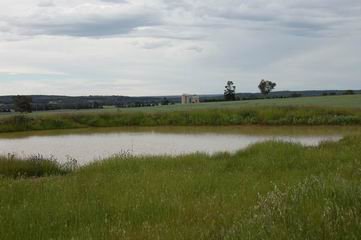
The trip from Mudgee to Dubbo. Green and allergy filled. Good bye and good riddance to the drought..

Friday, October 21, 2005

Libs vote to support Aboriginal future for the Block


MEDIA RELEASE

Local Liberals call for Aboriginal future in the Block

Three key local Liberal party branches have voted unanimously to support an Aboriginal future for the Block in Redfern.

At a meeting held this week the Darlinghurst/Surry Hills, East Sydney and Elizabeth Bay branches unanimously supported a motion moved by City of Sydney Liberal Councillor Shayne Mallard calling on the State Government to allow the local Aboriginal community to determine the future of the Block. The motion was seconded by Redfern community leader Ian Thompson and followed a presentation and debate about the governments plans for the area.

The motion reads: "The local Liberal party branches support in principle the Aboriginal Housing Company proposal for redeveloping the Block and call upon the State government to allow the local Aboriginal community to determine the future of the Block."

The motion concludes by calling on the Minister responsible for the Redfern Waterloo Authority, Frank Sartor to resign "after the irreconcilable breakdown in communication and respect." Referring to Frank Sartor's racist slur on Aboriginal community leader Mick Mundine, Councillor Shayne Mallard said:

"The minister has demonstrated yet again that he is not prepared to listen or treat people with the respect they deserve. How can the Redfern Aboriginal community sit down and negotiate with the Minister when there is a break down in respect and trust?"

The local Liberal party members heard from guest speakers Mr Michael Mundine, CEO Aboriginal Housing Company and Mr Peter Valilis Project Director for the AHC Pemulwuy Project. Both men outlined their vision for the Block including plans for an Aboriginal cultural centre, training college and commercial areas. Importantly the redevelopment will include new housing for the inner city Aboriginal community.

In response to a question from Shayne Mallard regarding the social and crime problems over the past decade, Mick Mundine explained that a mixture of private home ownership and renewed community focus would work to prevent a repeat of the past problems.

Legislative Council Parliamentarian Mr Greg Pearce, Shadow Minister for Infrastructure and Finance also addressed the meeting. Mr Pearce was instrumental in the Parliamentary Inquiry following the Redfern riots. He explained that the NSW Liberal Leader Mr Peter Debnam was backing the right for Aboriginal people to determine the future of their land and pointed out that the government has had no real answers to the social disadvantage and problems in the Block.

Shayne Mallard pointed out the positive and community empowering role the Redfern Community Centre was playing in the Block and that it was a good example of what can be achieved if people work in partnership with mutual respect.

For more information on the AHC Pemulwuy Project visit
www.ahc.org.au/redevelop/redevelop.html


RELEASE ENDS
21 October 2005

Tuesday, October 18, 2005

Dansk Opera Houses and Tassie Devils

eCouncillor's father is Tasmanian so I can cringe at this gift giving (see below) without feeling oppressive of the sensitive Tasmanian rights!

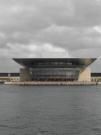
But what should Sydney be giving to Denmark? Maybe the Slip Inn? (please) or perhaps our Lord Mayor? (no lets not antagonise the Vikings). But maybe our/their Opera House would be more appreciated than the controversy surrounding the just opened Danish Beer Barrel (the new Danish Opera House) with a carport on top.


Which Opera House is Danish designed and in Sydney? Which is Danish designed in Copenhagen? This is one occassion where Sydney trumps the Danes.


From Denmark DK official news site of the Danish government.

Tasmania gives devils, spoons and socks as gifts Tasmanian devils might be one of the more unusual presents given in connection with the birth of Denmark's new prince. Mary Donaldson's home state Tasmania will be donating two of the rare animals


Peter Parks/AFP/Scanpix

A file photo of a Tasmanian devil at wild life reserve on Tasmania.

When looking for a uniquely Tasmanian gift to celebrate the birth of the royal couple's child, Premier Paul Lennon chose to donate a pair of Tasmanian devils to Copenhagen Zoo.
'In connection with the royal birth, we wanted to show the Danish people something which is completely unique for Tasmania,' said Lennon.
The present was gratefully accepted by the head of Copenhagen Zoo, Lars Lunding Andersen.
The animal, which was immortalised in the Warner Brothers cartoon series Looney Toons, is extremely rare in the wild.
Andersen hoped that the devils would mate and add to the population.
'Luckily, we have contact with one of our former animal attendants who moved to Australia several years ago. We expect to be able to seek advice with him,' he said.
The devils typically only grow to be the size of a large cat but derive their name from their powerful jaws and vicious growl that is typically emitted after sundown - characteristics which might cause a moment of unease for the proud parents.
It is still unknown when the Tasmanian devils will swoop into Copenhagen Zoo, where they will be neighbours to other Australian natives such as kangaroos and emus.
Other gifts from Tasmania included a spoon made from a combination of amber, which is common in Denmark, and krokoite, a typical Tasmanian mineral.
In addition, newborn babies born in Tasmania on the same day as the little prince received a pair of suede socks like those Mary and Frederik looked at for their child on their last visit to the island.
A major celebration is also planned with a bonfire and fireworks to take place on Hobart's harbour.

Sunday, October 16, 2005

Australian Princess - have our Cross City Tunnel too

While Denmark celebrates a new prince

Papa meets the press
A beaming Crown Prince Frederik talks to the press about the birth of his first son

The City of Cyclists still has to contend with strong growth in car ownership and increasing traffic in Copenhagen. Talk of a huge traffic tunnel under Copenhagen Harbour is linked with ongoing real commitments to public transport. Perhaps Sydney and the RTA can be consultants on how not to develop a new tunnel system ie Sydney's Cross City Tunnel fiasco.


Standstill predicted for tunnel-less Copenhagen An underwater city bypass is proposed as a way to keep Copenhagen's traffic flowing


Traffic in the city of Copenhagen

Without an underwater bypass under Copenhagen Harbour, the city's traffic - and its development - will grind to a halt, according to a new report.
'What we need is visions if we are going to see more growth in the city. Copenhagen needs a harbour tunnel that will be able to direct traffic away from the city,' said Flemming Borreskov, CEO of the Realdania Foundation, which supports public building projects.
The foundation's report proposes constructing a four lane, 12 km tunnel. If construction begins by 2007, the tunnel would be open for traffic in 2017.
The tunnel is expected to cost DKK 18 billion (EUR 2.4 billion) and would be paid for by charging a toll on the estimated 500,000 cars that would pass through the tunnel daily.
For Borreskov, the traffic through the tunnel would mean welcome reduction of traffic on city streets.
Borreskov said that even with planned expansions of public transportation networks, the city still needs to address how to deal with increasing automobile traffic.
'The construction of a circle line, extension of the Metro, and highway widenings are only a half solution if traffic is to keep moving,' he said.
According to the predictions, traffic in Copenhagen is expected to increase by up to 40 percent in the next 40 years and the current infrastructure is expected to buckle under the increase.
Building the tunnel might increase congestion at entry points, but for Peter Lundhus, CEO of Sund & Bælt, the operator of two of Denmark's largest bridges, it is a necessary evil.
'If we don't build the harbour tunnel, congestion on the other roads will grow and create even more traffic in the city,' Lund said.
/ritzau/

Thursday, October 13, 2005

Redfern Street bike lanes under threat

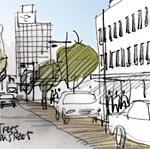
Council's multi million dollar granite-fication of the suburbs continues with the plans for the upgrade of the Redfern 'village' well advanced. The Council's project web site promises:

The Redfern Street Upgrade project aims to provide a more vibrant, active and safe public domain through the implementation of urban design improvements. The upgrade will deliver better visual amenity, enlivened retail activity and a pedestrian/bicycle friendly environment. The works will also create a strong and clear streetscape identity and reclaim Redfern Street as the backbone of Redfern.
Scope: The original scope of the works was Redfern Street, from Regent to Elizabeth Street. However, the project scope has been extended to include the expansion of Jack Floyd Reserve and some localised works for Regent Street.
(
see Council's plans here).

Just when you think that the City's attitude to providing equitable and genuine bike riding facilities had turned the corner after the debacle on Oxford and William Streets (
read about them here) we are yet again confronted with the attitude that when something has to be given up its the bike facilities that go! This time the bike user groups and the Councillors that support them (including this one) have worked hard to protect the inclusion of bike facilities in this upgrade to one of Sydney's most bike friendly communities. We have already accepted a compromise on bike lanes. The compromise agreed to is the provision of a dedicated bike lane on one side only (that being between parked cars and traffic) and the combination of traffic and bike lane on the other. The lesson here for negotiators is not to make any compromises too early because you are immediately tagged in a weak position for future negotiations.

Late last week news spread fast amongst the bike community that Council staff had revised the upgrade plans and had decided to recommend the scrapping of bike lanes altogether and the transfer of bike routes off Redfern Street and onto two parallel side lanes. This is apparently to enable a further widening of the footpaths by approximately 60cm (excuse the general nature of the information but no written reports have been provided). This is on a street where pedestrians fear to venture and shop keepers use roller shutters to protect their investments.

Council yet again fails to acknowledge the benefits that bike users bring to a streetscape. We all acknowledge the benefits do not happen overnight but as facilities and networks develop and grow and community attitudes change we will see the economic, social, health and environmental benefits accrue. The promised benefits of any streetscape upgrade are slow to develop. For example the Darlinghurst Road upgrade (without bike lanes) has not kick started the great urban revival as promised. Oxford Street will be anoter slow recovery.

A reminder on the opportunities and benefits that bike lanes and facilities will provide for Redfern Street:
  • Bike facilities should be treated with equity with other transport facilities eg pedestrians, cars, public transport.
  • Bike facilities should not be hidden from mainstream routes and public view as their presence and growing use help to further promote sustainable and active transport options.
  • Studies show that bike lanes and users are highly beneficial for local businesses.
  • Bike lanes and users help to reduce social isolation and add to passive surveillance and street safety.
  • Bike lanes and users add to community fitness, health and help reduce early mortality.
  • Bike lanes and users encourage children to be more fit and active and help create safer streets for them to live on - even if they do not ride a bike.
  • Bike lanes reduce exhaust emissions and pollution levels and therefore make the streetscape more pleasant and healthy for all users.

Councillors were briefed on the proposed changes on Monday afternoon. Two Councillors, myself and Chris Harris spoke out against the changes citing the arguments outlined above. Staff insisted that the changes were still providing facilities and options for bike users. It was the pea and shell argument. They could ride in the traffic on Redfern Street or if less confident take the side lanes along with the garbage trucks and laneway refuse. It seemed that some staff and Councillors were putting the case that it was bike lanes or trees, bike lanes or pedestrian space. The outcome is that staff will come back to the Councillors with options and more detailed assessment of the proposals.

Bike riders and user groups should continue to strongly lobby the Councillors to oppose the amendment to move bike lanes and facilities from Redfern street to side lanes.

email your Councillors:

Clover Moore mailto:cmoore@cityofsydney.nsw.gov.au

John McInerney mailto:jmcinerney@cityofsydney.nsw.gov.au

Marcelle Hoff mailto:mhoff@cityofsydney.nsw.gov.au

Robyn Kemmis mailto:rkemmis@cityofsydney.nsw.gov.au

Phillip Black mailto:pblack@cityofsydney.nsw.gov.au

Michael Lee mailto:mlee@cityofsydney.nsw.gov.au

Tony Pooley mailto:tpooley@cityofsydney.nsw.gov.au

Verity Firth mailto:vfirth@cityofsydney.nsw.gov.au

Chris Harris (supportive) mailto:charris@cityofsydney.nsw.gov.au

Shayne Mallard (supportive and copy) mailto:smallard@cityofsydney.nsw.gov.au

Come along to the public meeting to discuss the upgrade:

Community Meeting
Redfern and Regent Street Upgrade

Wednesday 2 November 20056pm – 7.30pm

Redfern Town Hall73 Pitt Street, Redfern

Wednesday, October 12, 2005

More on Human Rights Act


New Matilda has a report on the launch for a Human Right's Act for Australia with good photographs.


A Human Rights Act for Australia Campaign Launch
Wednesday 12 October 2005
Adam Hochroth

The launch of New Matilda's campaign for a Human Rights Act for Australia on 5 October 2005 was privileged to be addressed by ten distinguished speakers. Appropriately, in their discussions of universal human rights, the speakers brought with them different narratives, backgrounds and perspectives, yet ultimately they were unified by themes and ideas.
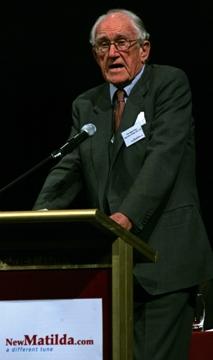
Elizabeth Evatt and Malcolm FraserA number of speakers, including Waleed Aly and Greg Combet, spoke of the role of a Human Rights Act as a reflection of Australian values. These values were outlined by Professor Spencer Zifcak as primarily those of egalitarianism, fairness, democracy, and freedom. A Human Rights Act would enshrine such values into law, and in so doing, would provide the legally enforceable counterparts to such moral values. However, the effect of the Act would go beyond the mere creation of legal rights and remedies. The Act would also affirm and proclaim those same values in a particularly meaningful way.It seems appropriate that the law should reflect our values. In this vein, a number of speakers, including Professor Larissa Behrendt (link
here ), spoke of the need for a Human Rights Act to make Australia a decent society, or ‘the best society that we can be.' If the law exists to regulate the affairs of persons in a society, how can anyone argue that the law should not reflect the values of that society? Why should Australian law not uphold the decency of Australian society?
Read more here. (Pictures souced New Matilda)

Thursday, October 06, 2005

Launch of Campaign for Human Rights Act for Australia

Tonight I attended the launch of a campaign to pass legislation in Australia for a Human Rights Act. I have always been sympathetic to the call for a Bill of Rights or some form of Human Rights Act for Australia. We are probably the last western democracy without some form of human rights protection. It's no reflection on the current government but more that the times in which we live are a reminder that we must safeguard human rights against the potential of excess and tyranny.
When I was first elected to the City of Sydney Council I was alarmed to read that the Lord Mayor had the power conferred by Council under voted delegation to enter any office and access any file in the organisation - not specified but obviously including Councillors. I found it interesting to watch as the Town Hall bureaucrats keen to defend that Lord Mayoral authority (and by default their powers) - no doubt another Sartor legacy. I opposed the powers in numerous early meetings and in response Clover Moore initially said 'I can assure you Councilor Mallard that I have no interest in reading your files'. I responded that it was not her benevolent administration that I feared (not) but rather the potential for future abuse by power drunk bureaucracies and their tyrant masters. Moore deleted the power wholesale the following Council meeting. When it comes to civil liberties I believe it is one occasion when we should take as the base line the worst nature of ourselves. And so we have today the unfashionable call for a Human Rights Act for Australia.

The launch of the campaign by New Matilda - a left of centre on-line publication - was at the Town Hall tonight. Nine worthy speakers presented their case in support of Parliament embracing the Human Rights Act they were putting up for consultation and debate. The speakers were all very good - even Greg Combet impressed me - although I cautioned moderator and friend Susan Ryan AO not to let the trade union dig its claws in too deep if she really wanted to see this Act passed by the parliament. I was probably the only Liberal party member there since last I heard the Young Liberals had called for Malcolm Fraser to be expelled or hand back his life membership for being too liberal! I read today that the Victorian Young Liberals believe that no one left of them should be in the Liberal party. They do forget Menzies own words about why it is called the Liberal party and not the Conservative party. But I digress.

Malcolm Fraser spoke very forcefully and with his much admired passion. Susan Ryan introduced him as one of the major forces and personalities in ending apartheid. John Menadue acknowledged Malcolm for accepting 100,000 Indo-Chinese refuges as prime minister without referral to opinion polls but rather because it was right to do so. Strong applause from the Town Hall audience.

Fraser outlined his support for the Human Rights Act by starting from the point that he had always thought common law protected our basic freedoms in Australia, but that events in the last five years had proven him wrong: Events like the mandatory detention of children and the wrongful deportation of a mentally ill Australian citizen. Human Rights are not proetcted by laws or the constitution in Australia. He was most concerned about the current proposed anti-terror laws endorsed by the labor State Premiers last week and allowing the detention by the executive on the advise of ASIO for 14 days of people suspected of having some knowledge of terrorist activity. Fraser contended that with the limited access for those subject to the Orwellian detention orders to inform family or lawyers that the Federal government effectively had the power to make even Malcolm Fraser disappear. And a journalist who dared report it faced 5 years in goal. He quoted Churchill who faced a much more serious threat from Nazism than we do from terror, when he said that 'executive detention of citizens is an odious power that should be surrendered at the earliest possible occasion.'

I heard from other speakers such as the inspirational Waleed Aly, a Melbourne lawyer and member of the Islamic Council of Victorian who whilst paying respect and support to the victims of the latest Bali atrocity, made the sensitive point that after such a terrorist attack the 'discourse on human rights becomes unfashionable'. More reason to have the discourse.

The Bill's main architect associate Professor Spencer Zifcak unwrapped the draft legislation in detail. He and others explained that this was a very conservative Human Rights Act that drew its basis from the recently adopted UK Bill of Rights. It provided little opportunity for judicial activism or lawyer enrichment.
By the end of the night my conviction that it is time for Australia to adopt some form of Human Rights charter was reinforced. I approached the organiser, Susan Ryan and remind her that to succeed this campaign must be bi-partisan. I intend to ask City of Sydney Council to adopt the draft Human Rights Act for Australia and seek public comment as part of the consultation process. I also intend pursuing it within the Liberal party forums and network available to me.
After several weeks of sadness and disappointment at where politics is heading today (re John Brogden and Mark Latham events) I left tonight's event feeling re-energised.

Off to Brisbane at 635am tomorrow to present two papers at the Bicycle Federation of Australia Conference and back to blog on the weekend.


Australia is the only Western country without a national Human Rights Act. New Matilda will launch its Human Rights Act campaign in October to change this.
NATIONAL LAUNCH OF HUMAN RIGHTS ACT CAMPAIGN
The Right Honourable Malcolm Fraser will be launching the Human Rights Act for Australia Campaign.
When: Wednesday 5 October 2005. Time: 6.15pm
Venue: Sydney Town Hall
Speakers include: The Right Honourable Malcolm Fraser, Professor Larissa Behrendt, Waleed Aly, Associate Professor Spencer Zifcak, Greg Combet, Nahid Karimi, Susan Ryan AO and John Menadue AO.

A Human Rights Act for Australia

Susan Ryan

An Australian Human Rights Act cannot be put off any longer.New Matilda readers are all too aware of recent erosions of our rights. The anti terrorism laws should never have been enacted without stronger protections for individuals. Shocked as we are by the sagas of despair coming out of mandatory detention, or wrongful treatment by immigration agencies of citizens and asylum seekers, these sagas continue, apparently with official sanction. Read more here.


The New Matilda Campaign, article by Nick Carney
Friday 30 September 2005
Nick Carney

In January this year, two comments were posted in response to an article in New Matilda entitled 'No Way Out: the High Court and Children in Detention'. The article was one of many that focused on the Federal Government's inhumane policy of mandatory detention for children of asylum seekers. The author, Spencer Zifcak, considered two then-recent proceedings in which the High Court of Australia had found that the 'Commonwealth Government (had) the constitutional and statutory authority to detain children mandatorily - even for years.'Zifcak, although appalled by the practice, agreed that the court's conclusions 'were clearly right.' How could this be? The highest court in the land powerless to stop the Federal Government from locking up children behind razor wire?Zifcak's answer was that Australia's Constitution affords very limited protection for human rights. Our international human rights obligations (which derive from various international covenants, to which we have been a signatory since 1966) have never been incorporated into domestic law - so they have no effect! Without constitutional or statutory protection for human rights, the Australian people must trust the parliament to make laws for the good governance of the country and have no recourse if it does not.

Myths about a Human Rights Act
Friday 16 September 2005

A Human Rights Act would erode parliamentary sovereignty
Parliamentary sovereignty refers to the fundamental power of the parliament to make laws for the governance of Australia. New Matilda recognises the importance of parliamentary sovereignty. That is why it is proposing a statutory rather than constitutional model for the protection of rights. The statutory model encourages rights protection through dialogue between the courts and parliament without taking power away from the parliament. The courts will be able to declare that laws are incompatible with human rights but the final decision on what to do about the incompatibility will remain with the government and the parliament.
A Human Rights Act only protects terrorists, criminals and refugees
A Human Rights Act would protect the rights of all people within Australia. Read more here.

Friday, September 30, 2005

Swans Victory Parade pics


I have attended many welcome home and celebration parades at the Town Hall. But in that time today's Swans Victory parade had the highest levels of enthusiasm and passion I have witnessed - but I may be biased. Here's a few pics and apologies to non sporty readers. Back to normal next week.

Swans sky writing & Town Hall crowds


Asking for tips while young Richard looks on. Councillors (L - R) Tony Pooley, Verity Firth & John McInerney
Below left - The premier said 'This photo will not do Shayne's political career any good'.
.

And the last picture above.

Thursday, September 29, 2005

City of Cyclists debates Congestion Tax as it struggles with Traffic Grid-Lock

World wide the debate continues about congestion taxes or road fees as they are called in Copenhagen. In Sydney we could call them road tolls as you can argue that they already exist- the only problem has been that the new Cross City Tunnel with its expensive tolls has forced more traffic than planned to divert through the maze of surface roads with accompanying road changes and traffic snarls. William and Park streets in the CBD are now bumper to bumper car parks most days. However, on a recent lecture in Sydney Dr. Enrique Penalosa, Former Mayor of Bogota Colombia, advised us that traffic jams are the environmentalists and new urbanists' good friend as frustrated private vehicle drivers abandoned short car trips in favour of alternate transport modes such as walking, cycling and public transport. Increased patronage for alternate transport force governments and private sector providers to upgrade services and infrastructure to meet the growing demand and raised expectations of the new consumers. The irony is that the CCT and increased petrol prices are already forcing a rethink on transport usage in Sydney. The figures are showing a increase in patronage of rail and bus services in the inner city. Reminds me again that we had to have a 'petrol summit' focused on reducing the price of petrol and not a summit to decrease dependency on petrol in our city (see my earlier blog on the petrol summit).

On a related thought - was I dreaming when late on Tuesday night I heard US President George Bush ask people to think twice before making a car trip to help conserve petrol stocks? But then the White House issued a clarifying statement a few hours later saying the President still firmly believes that using a private motor car is a fundamental freedom and right to all Americans.

Copenhageners ready to pay to drive As traffic congestion grows in the capital city, Copenhageners warm to the idea of paying road fees


Jan JÃrgensen / Scanpix Denmark

Heavy traffic in Copenhagen down town

With local residents purchasing more cars and commuters adding to the congestion, road fees might have a future in Copenhagen.
Bumper to bumper traffic in many parts of the city led six out of ten residents to support the idea of road fees in a survey conducted by Epinion for national public service station DR.
Motorists were somewhat more reserved in support of the idea, but 40 percent were nevertheless positive to the idea of road pricing. The fact that even motorists did not completely reject the idea of road fees could be attributed to their recognition that cars have a negative impact on the environment, according to Per Homann Jespersen, a traffic researcher at Roskilde University.
'Nobody is a motorist all the time, so even though people have a car in Copenhagen, they still want a good urban environment,' said Jespersen.
Local residents are behind the wheel in 80 percent of the trips made in the capital.
A majority of city councillors in Copenhagen are prepared to institute road fees, but the Liberal-Conservative state government and its support party, the Danish People's Party, are opposed to legislation that would open the door for road fees.

Wednesday, September 28, 2005

Transport Politics - Right V Left?


Regular eCouncillor readers know that I am no great fan of the Lord Mayor nor she a fan of mine. But I will give fair credit when appropriate. This is one of those moments. I am a strong transport reform advocate acknowledging that if we don't willingly reform our city transport systems and the active transport mix, it will eventually be forced upon us by the market. Right wing supporters may take a deep breath and argue that eCouncillor is yet again advocating regulations. Governments either lead transport reforms or the market will force it upon us much more painfully and perhaps after we reach the point of no return regarding environmental damage. The market I refer to is the rising costs of fuel and real environmental impacts of spiralling private vehicle ownership. The City of Sydney is approaching a major transport crisis. Investment by Labor in public transport has all but stalled, rail is unreliable and aging and buses continue to run later and later in aging buses. Meanwhile road grid lock continues as motorists avoid the excessive tollway systems. The City has conducted sound research on a new Light Rail system (read it here) and I am a full supporter of that proposal.
Clover Moore issued the release below and I couldn't agree more:

Sydney's car reliance reaches the end of the road
26 September 2005
Lord Mayor, Clover Moore MP today said: "People have had enough of traffic congestion and high petrol prices. We've become too car-dependent - and we're now paying the price. Motorists are being held hostage by high petrol prices and toll roads, because they just don't have any real alternatives".
"Sydney is a world class city and we need a world class transport system. Building more toll-roads is not the answer to Sydney's transport problems. It's time to invest in a major upgrade of our entire transport system.
"All the major cities overseas are seeing a revival of public transport and major re-investment in rail and light rail - even in the car-dependent US! The overseas experience shows that people will happily shift from cars to public transport if it is convenient, comfortable and fast. The potential economic, social and environmental benefits are enormous.
"Sydney urgently needs a range of new transport solutions to move people around far more quickly and efficiently - an integrated network of rail, light rail, buses and cycleways."


MEDIA RELEASE ENDS

Meanwhile the left and right continued to bait each other over 4X4 vehicles. From the Sydney Morning Herald today and emailed around the city by the Pedestrian Council and others with a sense of self justification that played yet again into the divisive agenda on both sides of the argument.

They're big, aggressive beasts - and that's just the drivers

By Damien MurphySeptember 27, 2005

No contest Â… Mosman mother of three Chris Rooney with son Jack, 4, in their BMW X5. Ms Rooney says she chooses to drive a 4WD because she believes it's the safest option for her family.Photo: Steven Siewert
The apparent victory of the giant four-wheel-drive in the urban jungle has prompted much road outrage, but now a profile of city off-roader owners confirms many prejudices, revealing them as aggressive, obese people who dislike gays and Aborigines.
And that's just the men.
The Australia Institute study found women who own luxury 4WDs were markedly different from the 40-to-50-year-old blokes: They're younger, wealthier and, while they worry about weight (their own), they couldn't care less about conspicuous consumption.
"People say, what about the environment?" declared Mosman mother of three, Chris Rooney, who drove a Range Rover for years but has swapped to a BMW X5. "For me, my children's safety is more important."
Read more here.

And so 'shock and horror' the right (or right of me anyway) take the bait or throw more bait in fact and we get high profile Australian media commentator and blogger Tim Blair with more provocation against the left anti-car movement. The tit-for-tat polarisation of the issue continues and both sides are to blame.

Tim Blair WHEEL GOOD RESEARCH
Own a 4WD? You a
bad person:

A new study has found that city owners of large four-wheel-drive vehicles are less community minded than other drivers, less charitable, more likely to be homophobic and have a low opinion of indigenous culture.The study, crafted by the leftoid Australia Institute, ...... In related news, 100% of Australia Institute studies are composed by idiots.
Read more here.

More level heads need to prevail. The concept that vehicle ownership denotes some philosophical political divide is a false, negative and dangerous development (see my blog earlier on this issue here) as potentially destructive and disproportionate in influence as the NRA in USA politics. Vested interests in toll ways, fuel, car sales and advertising related revenues are gaining a serious political foothold across the western world. Not a healthy outcome for a sustainable transport future.

Sunday, September 25, 2005

Swans Win! Now Sydney Victory Parade!!

Click on Swans club song to hear it played loud.

Congratulations Swans!

and a great history.

Sydney Swans- A Brief History Australia’s own code of football was played by clubs in South Melbourne and Albert Park as early as 1862, but it was June 1874 when the Red and White received its birthright. That Friday evening in the Temperance Hall, Napier Street, Emerald Hill, a group met to form a football club and four weeks later, on July 15th it was named the South Melbourne Football Club.
Read more here.

Friday, September 23, 2005

Town Hall goes red & white


Cheer, cheer the red and the white,

Honour the name by day and by night,

Lift that noble banner high,

Shake down the thunder from the sky

Whether the odds be great or small,

Swans will go in and win overall

While her loyal sons are marching

Onwards to victory.

Opening Night of Fiddler on the Roof

eCouncillor grew up in outer-western Sydney (not Dubbo as some have assumed) and attended four different state schools. Far western Sydney back in the 70's and 80's was a relatively sheltered backwater for cultural diversity. My schools were largely comprised of Anglo-European children. I remember just a few new immigrants kids but I never knowingly came by any Jewish students. Other than media coverage of Israel issues and lessons on WW2, I had little understanding of the complex culture and rich history of Judaism. That all changed when I went to Macquarie University and met a guy who turned out to be Jewish and invited me to his family home in Bellevue Hill for their Sabbath dinner. It was all very new to me and I still remember walking along the streets seeing as I passed windows, the various small families gathered around the table with the candles burning. It had made a lasting impression on me and an interest in exploring the story of Judaism.

That introduction by way of saying that it was not until 5 years ago that I was introduced to the film Fiddler on the Roof which to that point I had mistakenly thought was a kids musical (as the Sound of Music will always remain!). Last night I was honoured to represent Council at the opening night of Fiddler on the Roof at the Capitol Theatre. Opening night for any production is always a special occasion as the theatre crowd vie for attention and the cast put in an almighty effort for the audience and reviewers.

I can thoroughly recommend the show to any eCouncillor readers. Of course Topol (pictured) is the show stealer. He has been doing this production for decades and plays the role of Tevye (the father and narrator) in the film. Other familiar faces (just discernible through extensive costume and makeup) were Maggie Kirkpatrick (as the matchmaker) and Barry Crocker (as the wealthy butcher). The large cast of 39 all standout with robust singing and extravagant dance. The opening night crowd cheered and clapped throughout the production (wouldn't do at the Opera - I know) and much of the crowd gave a standing ovation. Well worth taking a night off.


The Sydney Morning Herald reviewed Topol's dedication to this play in August:
Typecast and loving it - fiddler to perch on roof again
In showbiz, being known by just one name is a sign of real success.
But before Madonna, Cher, Sting or Bono, there was Topol.
"But I think Fernandel was before me just a little," the Israeli actor said yesterday, on a break from rehearsals for the Sydney production of Fiddler on the Roof.
He shot to stardom as the bearded father Tevye in the 1967 London production of the musical and played the same role for Norman Jewison's film version, winning an Oscar nomination and a Golden Globe Award along the way.
This Australian show will be his sixth time playing Tevye, and the 70-year-old has no plans to stop any time soon.
"I'll do it any time they ask. I love this show," he said, explaining that he regularly finds new nuances in the script.
Read more here

Wednesday, September 21, 2005

Petrol Summit Should be About Reducing Car-Dependency


It's great to see the pedestrian and bicycle lobby groups working together for the common good of sustainable transport options. The reported dramatic increase in bus and rail travel this month reflect the impact of petrol prices as well as new toll fees biting the hip pocket nerve. I find it inexplicable that the NRMA consistently takes the us and them, with us or against us approach to sharing our finite road infrastructure with all modes of transport. For the hard headed car drivers out there, the more people we get into public transport or on bicycles in dedicated cycle lanes - the more cars will be off your congested roads.

Media Release below.

Tomorrow’s Summit Should be About Reducing Car-Dependency NOT Reducing Petrol Prices

The Chairman of the Pedestrian Council, Mr Harold Scruby and BicycleNSW CEO, Mr Alex Unwin said that tomorrow’s NRMA Petrol Price Summit was focused on the wrong subject. The major issue facing our nation is not about reducing petrol prices, it’s about reducing car-dependency.

Mr Scruby said: “Nowhere in the NRMA’s literature have they mentioned anything about car-dependency. And they have not invited representatives from the public transport or active transport (walking and cycling) groups. This is all about keeping petrol prices low so we can have more cars on the road.

For the last 2 days, 2GB’s Alan Jones has spoken openly about the need for rational debate on this vital subject. Here are some quotes:

· “But we can't turn the petrol pricing debate over to the alarmists.
· “It is not the responsibility of government to make a scarce resource cheaper and oil/petrol is a finite resource.
· “If the higher petrol prices make us think about public transport rather than driving the car, that is no bad thing.
· “We need to drive less, drive more economically, share private transport and make better use of what public transport there is.”
· Mr Jones quoted Robert Samuelson, a member of the Washington Post Writers' Group: "What the United States needs is a petrol price of $4 to $5 a gallon. Now, America currently pay $2.80 a gallon, (or 95 cents a litre). What America needs most is ‘a steadily rising oil tax.’ Elsewhere he argued that the traditional US car companies, General Motors, Ford and Chrysler are the least prepared for change. He said, "They tied their fortunes to the biggest 4WDs and pick-ups, hence the need for a stiff oil tax."

Mr Unwin said: “The fuel crisis is a perfect opportunity to encourage the community to seek more economical (and healthier and more environmentally sustainable) means of active transport like walking and cycling.

“Bike transport is a viable, environmentally efficient and inexpensive mode of transport that will also result in better health and well-being. The issue is not petrol prices. It is educating Australians not to rely on motor vehicles; if we follow the European trend of using bikes as main form of transport, we would be a much healthier nation,” Alex Unwin said.

Mr Scruby added: “We must shake off our western culture arrogance and imagine the price of petrol and the effects of global warming, if the people of China and India were to be as car-dependent as us. Petrol prices would go through the roof and the bitumen would melt. We must start setting an example and reduce car-dependency immediately, before it’s too late.

“We therefore encourage all Australians to participate in Walk to Work Day on Friday 7 October 2005 and ‘Leave the Car at Home’.

See:
www.walk.com.au

Mr Unwin said: “And for people wanting to try alternative forms of commuting, Portfolio Partners Sydney Spring Cycle on Sunday 23 October 2005.” See
www.bicycle.nsw.org.au
CONTACT: Harold Scruby - (02) 9968-4555 or (0418) 110-011
Or Alex Unwin at Bicycle NSW on (02) 9281-4099 (0425) 221-060
Email:
walking@walk.com.au or aunwin@bicyclensw.org.au

Crikey looks at Clover Moore's first 18 months

Crikey.com.au discusses Clover Moore's first 18 months...and picks up the little noted fact that she has managed to unite against her 5 quite different Councillors in the ballot for Deputy Lord Mayor and Committee Chairs. Something it took Labor 11 years to do at the former South Sydney City Council. I have just returned from attending the Council's powerful Traffic Committee - one of the committee chairs that Clover Moore seized control of last week rather than risk a non- Moore Councillor winning the chair position by luck of a draw from a hat. I must report that the Lord Mayor (chair of ten council committees) failed to show to chair today's Traffic Committee and offered no excuse or apology to the Police, RTA, Sydney Buses, community reps, Councillors and staff who sat waiting patiently for their newly elected chair to arrive. Finally defeated former Deputy Lord Mayor John McInerney arrived to take her place without explanation. Not a good start to her new self appointed responsibilities.

What kind of Lord Mayor is Clover Moore?
Christian Kerr writes:

Clover Moore, the Lord Mayor of Australia's premier city, has been getting a lot of press lately. As the independent Member for the state seat of Bligh, Moore built a good reputation among inner-city residents for fighting for their interests. While she usually wasn't able to influence outcomes, she was always able to say “I stood up for you.”Now, wearing two hats, things are different.
The Sydney Morning Herald ran a detailed piece on how her shortcomings are quickly becoming apparent over the weekend.The picture which emerges is of a person who isn't a good leader. The skills she had as the lonely MP fighting Macquarie Street or Town Hall don't serve her well as Lord Mayor. The fact that she has been able to unite the Liberals, Greens and Labor Councillors in opposition to her after only 18 months in office tells a very negative story of her leadership abilities.Moore is seen as egocentric, always wanting to be in the limelight with even councillors on her own team constantly sidelined. She cops flak for taking credit for the initiatives of others. There are many examples of this – like Labor's push to establish a Gay and Lesbian Liaison Officer and a successful Greens motion to limit the use of plastic bags in the City. Moore even takes credit for the work councillors on her team do. Marcelle Hoff fought for years to save the Water Police site in Pyrmont from developers for public space. But now it is Moore who is trumpeted as the saviour of the site although she did no work in this campaign.After Moore was able to unite Labor, Greens and Liberals last week, she was in danger of losing control of Council committees and her own power. Suddenly Moore used a procedural rule to seize the chair of all seven Council committees. After being criticised for wanting two jobs, Member of Parliament and mayor, she now has ten.Is that good for accountability?