Friday, June 23, 2006

Pyrmont Water Police Site to serve broad Community Needs

When eCouncillor campaigned for the City Council elections in 2003/4 my running mate Rachel Creek was a resident of Pyrmont Point. Rachel was keen for us to be involved with the community battle to prevent the former water police site at the end of Harris Street from becoming more of the Sydney Harbour Foreshore Authority's over development of the Pyrmont Penninsular. Early in the campaign (before the amalgamation) we met community activist Marcelle Hoff from the Friends of Pyrmont Point who was destined to become one of my colleagues on the new Council. Without hesitation I committed the Liberals to opposing the sale and development of this open space and supported the creation of a world class foreshore urban parkland.

Tonight the Council will endorse a masterplan for the new park at the former water Police site. This will bring to a conclusion the successful process of acquisition and extensive community consultation about the park's future. The local community, staff and consultants are to be congratulated on the excellent level of engagement in this process. Calls, faxes and emails are still arriving as various points of view are being promoted up to the 11th hour. Consultation is an interesting concept. Many believe it means the result wil incorporate every single view expressed in the consultation process or that a consensus or compromise will result. Those not happy with the outcome will argue the consultation process was ignored or flawed and those satisfied will stand by the process.


Community consultation such as that undertaken for the water police site delivers up to the Council the catchment of local and user views. Professional independent local government staff, landscape architects, engineers and consultants pull this process together into a report for the Council. Tonight is the stage where the Councillors - elected by 130,000 people from across the city, bring to the table their input to the process. Often at community consultation forums and workshops the Councillors are asked not to make input but to merely observe, taking into account that their obligation to the process is to shape and interpret the outcome at the Council chamber.

And so tonight 10 Councillors will debate the final plans for the controversial site and bring to the table the broader city perspective and responsibilities.

I am impressed with the recommendation from Council's staff. (Full report with attachments here). The contentious issues in the master plan are well described in the letter to today's Sydney Morning Herald. Balancing a well organised campaign against certain controversial elements of the masterplan are residents and users in support of the proposals. The points of contention is summary are:

  • inclusion of a community use building under the cliff face between in the south western corner.
  • the central shoreline walk through the park.
  • relocation of the existing children's playground.
  • access stairs from Pirrama Road to the cliff top of Pyrmont.

Some of the controversy unintentionally reflects the age old debate about what is a park? Some - such as the SMH letter writer have a more traditional Capability Brown view of open space (Capability Brown landscaped the great 19th century English estates with romantic grand rivers and vistas) versus others (including eCouncillor) who have a philosophy for urban parkland spaces attuned to the great 20th century landscape architect Roberto Burle Marx combining a built form understanding the urban environment creating a lyrical landscape of human scale and use. Some call this style 'over engineered' and others 'urban scale'.

I feel the masterplan for Pyrmont Point park balances the two philosophies without too many compromises. Significant open spaces lined with fig trees and eucalyptus plantings allow ample green vistas to the water whilst steps and pathways mark the historical alignment of the shoreline and permit transition from the hard built forms of the surrounding neighbourhoods.

The inclusion of the community building and related stairs is a point of difference where Councillors should be taking into account the broader needs of the community, value for community investment and longer term strategic planning. Again the concept of well scaled built form between the narrowed and realigned road and the cliff face with flat roof-top gardens and contemporary connecting stairs joining through two levels to the parkland below is an exciting response to the built environment and the parkland forshore below. Very Burle Marx. eCouncillor supports the community space because the responsible expenditure of tens of millions of dollars from across the City of Sydney ratepayers into this site needs to be a sustainable community investment. A future community use for this remote but strategic corner is an appropriate return for the broader community across the city and allows the site to cater for a larger cross section of community members - whether youth, elderly, multi-cultural, arts or others user groups. The stairs connecting via the roof of this building to the park below from the cliff above will provide another appropriate element of human and urban scale whilst at the same time improving the permiability and access for the community to and from the many homes and streets above.

Much emmotive debate has centred on the relocation of the children's playground. On a recent site inspection the case was made for the new location based on closer proximity to the proposed pavilion with toilets and sheltered seating. Moving the play equipment away from the waters edge has some demonstrated safety benefits. In many ways relocating the play equipment area to the more urban designed elements of the space and in turn opening up the point area to green space and uninterrupted water vistas is an appropriate balanced landscape design response and a logical amendment to the park after the addition of the new space and in effect the amalgamation of the parklands at Pyrmont.

No doubt the future of this important new urban parkland will continue to arouse impassioned public debate - not just between landscape philosophers.

Wednesday, June 14, 2006

Farrelley adjudicates on Moore & Sartor brawl.

eCouncillor has not always agreed with SMH writer Elizabeth Farrelly. Her assessment of the CUB/CSPC conflict published today (see below) is a concise outline of the events of the past few days and months. Whilst the government will not dare smack the political hornet nest by sacking the City Council again. If they do pull off a win in the March state election a case is clearly being put together by Clover's arch nemesis Frank Sartor for another State government intervention.

Once-bullied Sartor grows up and becomes a bully
Elizabeth FarrellyJune 14, 2006

IT'S that dumb-and-dumber feeling you get when someone grabs your hand and makes you slap yourself, hard, in the face. It's how the City of Sydney council must be feeling right now.
Last Wednesday, after 18 months of haggling with Foster's over a "voluntary planning agreement" on the Carlton and United Breweries site on Broadway, and moments from a joint announcement, the council found itself formally asking the planning minister to step in and take over. Uh, please, sir, kick me.
Say what? Why would it do that? Threats? Coercion? Ventriloquism? Well yes, actually.
The story starts here. Since 1991, all serious council planning decisions have been made not by the council but by the Central Sydney Planning Committee.
Four of the committee's seven members - a carefully appointed majority - take marching orders directly from the state but its decisions are still, legally, those of the council. This is a lie, but it's a legally stipulated lie, designed for market consumption.
What market? Us. Most of us regard most development with something between shock and horror. At the same time, and especially if we don't have to look, we want construction, jobs and economic growth.
The committee is designed to schmooze this electoral paradox, ensuring that the council wears the blame (who in God's name approved that?!) while the state gets both control and credit for growth, such as it is.
It's smart, but it's not honest. An honest system - or planning minister - would have said, two years ago when the CUB process was rebooted after the mayoral elections, "this site is way too lucrative for you local government pissants, so the state will annexe it to Redfern-Waterloo, though it is patently not Redfern-Waterloo, so we can exact developer levies under the ever-flexible Redfern-Waterloo Authority Act. To placate the developer, a major party contributor, we must of course raise heights and densities well past what is reasonable, while loosening energy-saving targets for those same, high-energy developments. You understand. It's simple dollar arithmetic."
But that isn't what the minister, Frank Sartor, said. Instead, he told Parliament: "The second untruth I need to correct is the notion that [the Redfern-Waterloo Act] is a cash-grab by the Government. As if we would try to redevelop Eveleigh or Waterloo as a cash grab!"
As if. Now, the Government proposes 18 storeys for Eveleigh-Waterloo and more than 33 for the CUB site, while in the same breath halving Basix requirements for residential towers. Cash grabbing, back scratching and bullying in a single, practised move.

Bullying? It's that old playground graduation from bullied to bully. Like when, in 2000, Bob Carr invited the then lord mayor Sartor to adopt the cash-starved Museum of Contemporary Art. He waited until the council had spent 18 months and $100,000-odd on a proposal before deciding, at the last moment, to resume MCA funding after all.
Now it's Minister Sartor who waits, while the council lavishes energy on CUB, before pulling the rug at the last moment. As an exercise in humiliation it works, every time.
The council - surprise - couldn't win. Eighteen months ago, when Clover Moore's administration was new, CUB's then preferred developer, Australand, walked out citing "delay and uncertainty".
Now Foster's, as the site owner, pleads likewise. But look closely and you'll see who's been playing funny buggers.
The delay, as a process run by the Central Sydney Planning Committee, has actually been in government control all along. Uncertainty, under the minister, can only increase, since the move takes the CUB site from known and agreed limits (a 100-metre height limit and 4:1 ratio between built area and site area) to a situation that is wholly up for grabs.
As for the assertion by Foster's that "it's been a very difficult process" dealing with the council, consider this sequence of events.
Last July, the council wrote to the Planning Department requesting clarification on developer contributions for the CUB site. No response.
In January, the council sent the minister its draft plan and, in February, answered his queries on it. No response.
Negotiations on the voluntary planning agreement commenced, and by May 16 there was in-principle agreement. Emails from Geoff Donahue, communications director for Foster's, to the council, dated May 26 and May 30, confirm that Foster's was happy with the agreement and ready for a public announcement "on Monday".
Meanwhile, however, on May 25, Sartor faxed a letter to Moore. "I am advised," it said, "that a draft VPA has not been agreed on to-date despite lengthy negotiations." The letter threatened to declare the CUB site state significant, wresting it from planning committee control.
This forced Moore to call a special meeting of the planning committee. There, on June 7, the four Government members revolted without warning, using their majority to request ministerial intervention. It was, in the words of one councillor, Shayne Mallard, sheer "political bastardry".
The irony is that the product may be fine. Certainly it's the right site. If there's any block in the state positively begging for high-rise, high-density residential development, it's this one: southern CBD, huge site, major arterial, nearby UTS tower, public transport centre of the universe.
It's the process that sucks. Whether the main push is anti-local government, anti-Clover, ancient Frank-versus-Clover rivalry or the old ALP anti-women-in-politics-other-than-nodding-dogs, hardly matters.
From the public interest viewpoint, the test will be how high the towers, how much car parking (despite proximity to Central Station) and how many dollars flow from here to the otherwise unfunded Redfern-Waterloo Authority. By then, though, it'll be too late to cry foul.
Elizabeth Farrelly writes on planning and architecture issues for the Herald.

Friday, June 09, 2006

Frank and Clover fight but Inner City will be the Loser


eCouncillor was elected (by draw from the hat) to the powerful Central Sydney Sydney Planning Committee (read about the CSPC here) last September as the first appointee not endorsed by either the Lord Mayor or Planning Minister of the day. So it is that I am in the unique position to sniff out political motivations and ambush from either side. The 11th hour intervention by NSW Labor Planning Minister Frank Sartor (a former Lord Mayor and chair of the CSPC himself) to effectively take state control over the most lucrative development site in Sydney (valued at up to $1 billion) has all the hallmarks of a political fix designed to humiliate the Council and help-out the fraying state finances.

Sartor's letter to the lot Mayor and CSPC (undated but faxed 25 May) undermines the Council's complex negotiations on the public domain benefits from the massive development ( read Frank's letter to Clover here). The letter was marked CC Councillors John McInerney and Shane (sic) Mallard - but strangely my (Liberal) office never received a copy.

The CSPC held an Extraordinary meeting this week to consider its response to the Minister's letter (see agenda) and consider Clover Moore's response (see Clover Moore's letter to Frank Sartor). I sat through the hand ringing and polite talk from the government CSPC representatives for half an hour waiting patiently for someone to point out how outrageous this intervention was. In the end after one of Clover's familiar read on the record monologues, I had had enough. I spoke on the whole issue attacking the 'offensive letter' from Sartor as an act of political 'bastardry' and accused him of arrogantly taking the controls off the CSPC and Council so he can force in a gross overdevelopment and rip out as much money he can for the state budget. Leaving a legacy of over-development for the City of Sydney to clean up and live with.

My motion that :"The CSPC calls upon the Minister for Planning Frank Sartor to withdraw his letter addressed to the Lord Mayor on 25 May 2006 and indicate to Fosters and CSPC that he does not intend to use his powers under section 3A of the EP&A Act to call in the CUB development site, and to direct CSPC, Council and Fosters to conclude the Voluntary Planning Agreement."

The motion was moved Mallard and seconded John McInerney (a Clover Moore independent) and lost 3 to 4 (Council vs government). The final recommendation reaffirmed the CSPC support for the current draft controls agreed to in December and the development values they set out. This was passed unanimously and put the CSPC position on the record for the Minister and State Department of Planning. The CSPC then moved an additional motion then referring the whole project to the Minister for a final determination. That referral clause was disputed by myself as running up the white flag and surrendering to 'bully boy tactics'. It was passed by the CSPC with the 4 government votes to 3 Councillors against.

The CSPC and Council is very distressed about this shabby unprecedented treatment and the local community (Chippendale) are very concerned and angry. They fear further over-development and loss of the hard fought public benefits.


The questions that arise from this affair are:

  • how long ago did the Minister start talking with Fosters about his concerns? (Answer - seems like months now).
  • Why didn't the Director General of the Department of Planning who is a member of the CSPC offer to mediate this dispute prior to the current situation with public stand-off between Sartor and Moore? (Answer - because Sartor wanted a confrontation with his old nemesis Clover Moore).
  • why was the CSPC not advised by the State government about increased levies on the project? (Answer - because the cash crisis for the Redfern waterloo Authority has only grown more evident as developers fail to show interest in the 'Redfern renewal').
  • what level of additional development is the Minister considering in return for higher cash levies? (Answer - a 'flexible' level according to the Minister)
  • how will the Minister take into account community feedback on the site? (Answer - seems not much as one of his key CSPC representative is not attending the community consultation promoted below).

Clover Moore does not escape this free of responsibility:

  • How have the two jobs as Lord Mayor and MP for Bligh (both cover the CUB/Chippendale area) benefited the community? (Answer - seems not at all).

Council Calls Community Meeting:

Urgent Update on
Carlton and United Breweries Site

An urgent meeting has been called by Council to update the community on significant events surrounding the future of the Carlton and United Breweries (CUB) site.

7.30 pm, Thursday 15 June 2006
Medina Executive Sydney Central, in the Royal Mail Room
2 Lee Street Sydney (adjacent to Central Station)

The Minister for Planning, Frank Sartor, has written to the Lord Mayor at the eleventh hour seeking increased Floor Space Ratio (FSR) controls for the CUB site and last minute inclusion of the Redfern Waterloo Authority (RWA) affordable housing levy in the draft Voluntary Planning Agreement (VPA) that the City was almost finished negotiating with Fosters, the site owner.

The Minister's late intervention threatens to increase height and density on the site; to derail negotiations on the VPA; and to compromise the community benefits for residents, including the proposed 5,000 square metre public park and $2.5 million community centre.

The City of Sydney and Central Sydney Planning Committee (CSPC) signed off on planning controls for the site in December last year, with an agreed FSR range of 3.5:1 to of 4:1. The absolute upper end of the range is conditional on achieving high standards of amenity, heritage, design excellence, parkland and sustainability. The draft controls were developed to balance the owner's rights with environmental constraints and community benefits.

Over the past six months, the City has worked with the site's owners to complete a VPA to secure all public benefits. This process is occurring for the fist time under new planning legislation and the Council and CSPC agreed that the draft VPA be publicly exhibited with the draft planning controls.

The Minister's last minute intervention has caused uncertainty and resulted in the site's owner backing away from an agreement that was about to be signed. The City had received RWA advice that the State Government would separately negotiate an affordable housing levy. While that levy was expected to be around three per cent of the development value, it now appears a higher level is proposed, compromising the VPA and the intended public benefits.

This looks like the Cross City Tunnel all over again if the Government seeking up front fees in exchange for controls that benefit the developer but are contrary to the public interest.


SMH coverage below:

Slum city fears as Sartor grabs massive project
Sherrill Nixon Urban Affairs EditorJune 9, 2006

THE Minister for Planning, Frank Sartor, is set to take control of the city's biggest residential project, igniting fears he will allow enormous apartment blocks that will become Sydney's future slums.
The Lord Mayor of Sydney, Clover Moore, and Chippendale residents say Mr Sartor's last-minute intervention in the $800 million Carlton and United Breweries site is a blatant grab for more cash from the eventual developers.

They fear he will approve much larger apartment blocks on the Broadway site than the City of Sydney Council was prepared to accept, in exchange for higher developer levies which would be used to fund affordable housing in the Redfern-Waterloo area.
"The Government is looking for money here and you are just looking at the slums of the future," Cr Moore said.
The 5.7-hectare development, approximately the size of four city blocks, is expected to house about 3000 people in 1800 apartments - tripling the population of Chippendale.
It has been the subject of two years of difficult negotiations between the council and the site's owner, Foster's.
The huge blow to Cr Moore and her council came on Wednesday night at an extraordinary meeting of the Central Sydney Planning Committee.
The committee, comprising four government and three council appointees, considers city developments worth more than $50 million.
The meeting was called to respond to a letter from Mr Sartor, expressing concern at how long it had taken the council and Foster's to agree on a range of planning issues. In the letter, Mr Sartor also directed the council and Foster's to negotiate the affordable housing levy - a matter both parties, and the Central Sydney Planning Committee, had believed would be negotiated separately.
Cr Moore described the letter, which arrived just days before the council and the company were due to sign an agreement, as a "bolt from the blue".
At Wednesday's meeting, the government appointees used their majority vote to ask Mr Sartor to "call in" the development and assume planning control. Neil Bird, the deputy chairman of Landcom, told the meeting he did not believe the council and Foster's could come to an agreement following Mr Sartor's intervention.
"I think it's better to act professionally and request the minister use his powers," Mr Bird said.
Cr Moore, the Liberal councillor Shayne Mallard and the Moore-aligned councillor John McInerney opposed the motion, in a rare split vote.

"The fact is that the minister's intervention is nothing but political bastardry in my mind. It is designed to harm you [Cr Moore], it is designed to harm the council," Cr Mallard said.

But the committee passed a unanimous motion affirming its support for planning controls approved in December that restrict the highest buildings on the site to 100 metres, or approximately 33 storeys, and provide for a 5000-square metre park, child-care centre and community centre on the site.
Chippendale resident groups fear Mr Sartor's takeover would jeopardise those community facilities, destroy the heritage values of the site and lead to higher-density development.
Lindsay Charles, from the Friends of the Carlton United Site group, said that local residents believed the development allowed by the council was already too large.
"We have got the CBD on one side of us. If we have got this [development] directly behind us or we are just simply never going to see the sun again," Ms Charles said.
A Foster's spokesman, Troy Hey, said the company believed it was possible to have a higher-density development while retaining the community facilities.
He welcomed the likely takeover by Mr Sartor as a way of providing more certainty for Foster's, but conceded it meant going over a lot of ground that had already been the subject of negotiations with the council.
A spokeswoman for Mr Sartor, Zoe Allebone, said the minister would seek advice about whether to assume control of the development, but believed doing so could cut six to 12 months off the approval process.


Moore and Sartor trade blows over city brewery site

Sherrill Nixon Urban Affairs EditorJune 10, 2006


THE Lord Mayor of Sydney, Clover Moore, has sought assurances from the State Government that money raised from the development of the Carlton & United Breweries site on Broadway will be spent on affordable housing in Redfern.
Cr Moore called on the Planning Minister, Frank Sartor, to "come clean" on how much money the Government would raise through an affordable-housing levy on the developer and how it would be spent.
The two leaders spent the day trading insults as Mr Sartor took advice about whether to assume planning control of the $800 million residential development.
More than two years of negotiations between the City of Sydney and the site's owner, Foster's, reached an impasse this month when Mr Sartor criticised the way the council had handled the talks and told the parties to negotiate the levy.
Residents and the council fear Mr Sartor will allow bigger apartment blocks to be built on the site in exchange for a larger developer contribution, at the expense of community facilities such as parkland.
"How can the minister claim to provide a balanced outcome for the community when he is ignoring expert advice and advocating for an increase in the size of the development which will see his Government reap a cash bonanza?" Cr Moore asked.
Mr Sartor said he had a record of guaranteeing quality public facilities and it was a "simple untruth" to suggest the development would be worse if he took over planning control.
"The Lord Mayor should concentrate on her administration," he said. "She's had two general managers and she should concentrate on doing her job better."
Mr Sartor also said the council was not capable of addressing the architectural quality of the apartment blocks or affordable housing, and promised that the levy - which is expected to raise about $30 million - would be spent appropriately.


and today's SMH letters..

Developers the only winners in towering mess


Tuesday, June 06, 2006

John Marsden Condolence Motion

The Late John Marsden - Condolences Motion 5 June 2006

The Council notes with sadness the death of solicitor John Marsden AM, and acknowledges his significant contribution to the community in the areas of human rights, civil liberties, gay and lesbian law reform and the legal profession. Council expresses its condolences to John's family and colleagues at Marsdens Law Group.


Motion moved by Councillor Shayne Mallard:

At John Marsden's epic funeral held at Campbelltown on Saturday, John wrote his own brief eulogy as the introduction to the glossy 24 page Eucharist program, "I have been described as tough, arrogant, noisy, outrageous, over the top, mega ego - but a tenacious fighter for what I want and what I think is right. "

Typical John Marsden.

Michael Knight said that Marsden's enemies described him as 'Offensive, rude, arrogant, abusive and a bully' and that all his friends agreed with that description.

John Marsden was either loathed or loved. As controversial in death as he was in life. John would have liked that too.

I do not want to dwell on the commentary about John's so called 'flaws'. Few published words about them have been balanced and too many have been cowardly. I will leave it to the distant historians perhaps not yet born to assess John's contribution to our times more objectively.

Instead, I stand here tonight as a good friend of the late John Marsden asking this Council to join with me in acknowledging the tremendous dedication and commitment to our vast and diverse community made by John during his 64 year life and to convey our thanks and condolences to John's family and also his colleagues. I particularly want to acknowledge John's sister Jane in the public gallery tonight.

Justice Michael Kirby described one's curriculum vitae and awards as the 'froth and bubble' of life. He went on to acknowledge the two key pillars of John Marsden's life - courage to himself and kindness to those worse off.

But tonight I do want to take a few minutes to acknowledge the 'froth and bubble' of John's life, because as we go through our own lives it is that froth and bubble - that work we do for our communities - that sustain and nourish so many of us. And local government seems so much about the froth and bubble of our daily toil.

John's life had a lot of Kirby's froth and bubble. It was calculated he devoted 140 volunteer years to roles with many community organisations spread across this city.

In the back of John's funeral program is reprinted his CV. Four pages of tight script detailing his work for various communities and awards presented by them in tributes during his lifetime. Let me outline a few:

From 1981 until recent years very active in the Law Society of NSW including a distinguished year as the NSW President.

He was the state president for the Council for Civil Liberties for 6 years and made a life member.

He was a director of various charities and community causes including Odyssey House and the magnificent Campbelltown City Art Gallery.

Member, director and life member of various sports bodies in his beloved Campbelltown.

He campaigned for many causes such as Aboriginal reconciliation and refugee support.

And of course he was awarded an Order of Australia.

But aside from Phillip Street - the Law, and Macquarie Street - Civil Liberties, the area that John worked most to support our City of Sydney was Oxford Street for Gay and Lesbian law reform.

Stretching from his decision as a closeted gay man to drive in to the city and help the first Mardi Gras marches - known as the 78's who had been locked up by Police in Darlinghurst gaol - John's courage for the causes of Gay and Lesbian law reforms and equality were untiring:

20 years as honary solicitor for the gay and lesbian Counselling Service

24 years as honary solicitor for the Gay and Lesbian Mardi Gras

Life Member of PRIDE

Foundation and Life member of the Gay and Lesbian Business Association

Elected to both the Mardi Gras and PRIDE Halls of Fame.

John is also remembered for his work with HIV AIDS organisations including as a board member of the AIDS Trust.

And when private reflective moments would take John he would recall the hundreds of AIDS funerals he attended, friends he buried and the estates he administered during the darkest days of the AIDS plague that ravaged the Sydney gay community.

This Council should acknowledge JoMarsdenden, flaws and all. As Confucius said - 'better a diamond with flaws than a pebble with none'.

He was generous to a fault, passionate about his causes, overwhelmingly driven by the pursuit of equality and justice in our society.

Colourful, larger than life. I think that sadly we shall not see the likes of John Marsden again in our lifetime.

To John's wonderful family - particularly his sister Jane and his brother Jim, I convey my and Jesper's heart felt sympathy and sadness at your loss.

To his colleagues at Marsden's Law Group I also want to convey the Council's sympathy and respect.


Motion passed unanimously.


Friday, June 02, 2006

Clover misses the point on Light Rail tour

News today that Clover Moore will not lead an important study tour of US light rail systems organised by Professor Ed Blakely. eCouncillor readers will recall my recent post on Blakely's address to the SGLBA (read it here). The 'junket' as Clover's spin puts it could have been organised at no cost to the Sydney rate payers with invitations extended by US host cities and Sydney business community support. There is more to business leadership in this city than fancy silver service 'business round table' lunches in the Lord Mayor's private reception room. Read my letter to the Editor following the Telegraph article below:

Mayors' US transport trip

EXCLUSIVE By LILLIAN SALEH, Urban Affairs Reporter
June 02, 2006


DELEGATES from three Sydney councils will head to the US tomorrow to find out what we already know – our transport system is ailing and in urgent need of an upgrade.
Ratepayers will pay $16,000 for the Mayor of Canterbury and Leichhardt's environment management director to criss-cross several US states for a week.
Parramatta's Mayor will join them but his costs will be covered by a scholarship.
The tour will be led by Sydney University Professor Ed Blakely, who until recently headed the State Government's metropolitan strategy reference panel.


Canterbury Mayor Robert Furolo, Parramatta Mayor David Borger and Leichhardt Council director of environment and community management Leta Webb will join Mr Blakely as they tour San Francisco, San Jose, Oakland, Pleasant Hill, Portland, Denver, Dallas and Washington DC.

They will study cities which have embraced a transit oriented development approach to planning, which involves designing developments around better public transport systems.
Mr Blakely said the delegates would investigate how some US cities had successfully been revitalised by improving light and heavy rail networks and reducing reliance on cars.
He defended the tour and said it was vital local councils kept up with world practice. "Most reporters wouldn't want to do this much work," he said.
"The issue here is you can't be a leader without knowledge. We are part of the world and we need to know what's going on."


Sydney Lord Mayor Clover Moore – who is a big fan of light rail and discussed the idea of the tour with Mr Blakely several months ago – yesterday said she declined his invitation because she did not believe in spending ratepayers' money on "junkets".

"Clover doesn't go on junkets," a spokesman said. All three councillors denied the trip was a junket.
Leichhardt Council delegate Leta Webb said the study tour would prove invaluable when putting together the area's new local environment plan.
"This is a highly structured activity. I know there are some study tours that involve councillors going on a holiday . . . but this is not one of those," she said.
Parramatta Mayor David Borger, who initially withdrew from the tour because his wife is pregnant, will go after securing a Sydney University scholarship.
Mr Borger, who is studying for a masters degree in urban planning, is considered a future key local government figure.


The Daily Telegraph

To the Letters Editor

Dear Editor

Clover Moore is not leading an important study tour of US capital city light rail systems because she has to stay in Sydney for Parliament and not because she 'does not go on junkets' (Mayors' US transport trip 2/06/06). The distinguished urban planning Professor Ed Blakely recently told a recent Sydney business association dinner that Clover Moore could lead the study tour at no cost to the ratepayers and that her second job as a state MP is distracting her from focusing on running the City of Sydney. Professor Blakely told the audience that she should decide which job she wants and quit the other.

When parliament is in recess Clover Moore packs her bags for her fair share of 'junkets' including trips to Japan, stop overs in Singapore and a fun night at the opening ceremony of the Commonwealth games in Melbourne - all on ratepayer's money. Most reasonable people do not begrudge her these perks as they are essential in representing our city. However, advocating a $1.5 billion light rail system for Sydney (financed by debt) and not participating in an independent study tour of similar systems overseas, is actually a lack of leadership for our global city and demonstrates yet again that MP and Lord Mayor are conflicting jobs.


Shayne Mallard
Councillor
City of Sydney


Tuesday, May 30, 2006

Debnam Announces Edward Mandla as Liberal Candidate for Sydney

DEBNAM ANNOUNCES EDWARD MANDLA AS LIBERAL CANDIDATE FOR SYDNEY

NSW Liberal Leader Peter Debnam today welcomed Edward Mandla as the Liberal Candidate for the electorate Sydney in the March 2007 State election.

“It is with great pleasure I announce Mr Mandla will be the Liberal Candidate for Sydney at the 24 March 2007 Election,” Mr Debnam said.

"After a decade of neglect the people of Sydney are desperate for a change of Government and the only way that will happen is if enough Liberals are voted into Parliament," he said.

“Edward is a long term CBD resident; working, living and bringing up a family in the area has given him an understanding of the environment and challenges in the electorate.

“Edward has his finger on the key issues in the new seat of Sydney: law and order, public transport, roads, education and health.

“Edward is passionate about moving Sydney onto the front foot with well thought out and positive solutions to address the infrastructure crisis gripping the city.

“At the same time Edward realises the need to protect the character of the local community. He played an integral role in the ‘Save Our Working Harbour’ campaign, helping organise a large rally to protest the Iemma Labor Government’s plans to sell off Sydney’s working harbour facilities.

“Edward has over 20 years experience leading organisations and is director of CBD based SMARTFORCE Solutions. This extensive business experience will assist the implementation of Liberal/Nationals policy initiatives such as payroll tax cuts in an effort to kickstart the faltering economy.

“Edward has introduced a Work Life policy to encourage a family friendly environment in his company, which promotes more flexible work hours, options for fully paid parental leave and child care reforms.

“As President and office bearer of the Australian Computer Society for more than a decade, Edward lobbied hard to ensure all school children are computer literate and for all homes to have broadband Internet access.

“His passion for sport has seen Edward referee junior and school basketball games for ten years.

“Edward Mandla will continue to fight for the residents of Sydney, exposing Labor’s neglect of the local area and the decaying state of our hospitals, roads, transport and schools.

“I look forward to Edward Mandla being part of the Liberal team to take the fight up to the Iemma Labor Government over the next ten months,” Mr Debnam said.

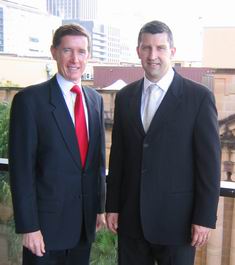
ENDS (pictured NSW Liberal Leader Peter Debnam MP and candidate for Sydney Edward Mandla).

eCouncillor comments:

Correcting some mischief going around in Council offices and media circles today before it appears on the back of the SMH. The Liberals have endorsed a candidate for Sydney state seat (see media release). Edward was unopposed and unanimously endorsed by the local branch members as a candidate who relates well to inner city issues and the values of tolerance and compassion held by most inner city people. Contrary to rumour I was not defeated in a preselection. There was no preselection contest. I decided not to run but instead focus on my Council workload and business. Edward enjoys my full support both as the local Liberal Councillor and as the President of the Liberal Party in Sydney state electorate. I hope that clears up any concerns for my political well being that some have been mischievously expressing today.

Weekend visit to Art on The Rocks


Sydney's historic and unique Rocks area is not governed by the City of Sydney Council but rather falls under the control of the Sydney Harbour Foreshore Authority and ironically the Minister responsible Frank Sartor. I must say I don't think they do a bad job at managing the area and balancing the various interests and needs of the diverse stakeholders from tourism operators to local residents.


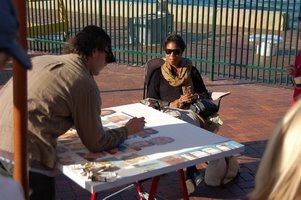
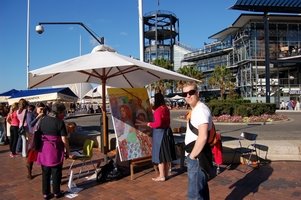
On the weekend eCouncilor and partner visited the Rocks to experience the 4th annual 'Art on The Rocks' festival. The weather was excellent for a two day event featuring 65 artist sprinkled around the public spaces of The Rocks each competing for a $35,000 prize purse.


"The Rocks through many different eyes ..transforms into an outdoor artist's studio" is the promise of the promotion and it lived up to that as small crowds gathered around each artist's location to patiently and politely observe the artists go about their magic craft. I was reminded of a few artist known to me that could not tolerate being made produce something in 48 hours especially under the public gaze.


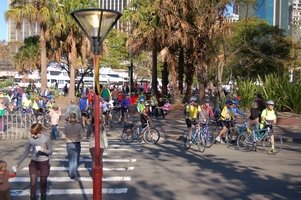
As we walked from First Fleet Park along the Overseas Passenger Terminal we were delighted to see a huge group of cyclists paying a visit to Sydney. Around to Campbells Stores with live Jazz and good food. It was well worth the visit and an event to mark in the diary for next year.

Thursday, May 18, 2006

A loud voice for civil liberties falls silent - Vale John Marsden


MEDIA STATEMENT

Vale John Marsden AO

Liberal City of Sydney Councillor Shayne Mallard has paid tribute to his friend and leading civil libertarian John Marsden who died overnight whilst on a trip in Turkey.

"A loud voice for civil liberties and human rights has gone silent today," Shayne Mallard said.

"John Marsden will be remembered for his fearless advocacy for many human rights and social justice issues. As a gay man I will always be indebted to John for his courageous campaigning over his lifetime to remove the many discriminations against homosexuals."

"John Marsden's legacy as an activist for justice and equity will live on in all he mentored and influenced during his busy life including human rights, law reform, civil liberties and gay rights advocates."

Shayne Mallard who has been a close friend of John's since the mid 1980's has described him as an Oscar Wilde figure in our time.

"John Marsden delighted in confronting people about his sexuality. For those who passed this test they discovered a passionate caring man, strongly religious with a very close and loving family. John had many loyal friends from all walks of life and all sides of politics. He was a larger than life character."

"John never hesitated to let you know his opinions on the issue of the day with his 6am telephone calls legendary."

"For those of us deeply saddened at John's passing we now carry his legacy forward in the never ending struggle for equality and justice in a world where John's ideals and human rights principles are under pressure."

Shayne Mallard said his thoughts were with John's family especially his sister Jane Marsden, brother Jim, his Marsdens law firm colleagues and many friends.


RELEASE ENDS


Read the tribute to John by the Council for Civil Liberties.

'YOU CAN’T FIGHT CITY HALL, CAN YOU?
Council for Civil Liberties, Conferral of life membership on John Marsden

We meet here tonight to honour John Marsden – rather, to acknowledge the honour accorded him by the Council for Civil Liberties.
John Marsden is only the third recipient of life membership of the Council for Civil Liberties. It is a very great honour and by your presence here tonight you mark your endorsement of that honour.
John’s career is a record of contribution to the community, distinguished by a forthright style and brutal honesty. Above all, he has shown great strength in adversity.
As a criminal lawyer working in the brick and bitumen suburbs, he is keenly aware of the structural disadvantages faced by the poor, the homelessness, the marginal and the disadvantaged when they confront the majesty of the law. In his capacity as President of the Law Society, he spoke out publicly on access to justice, legal aid funding and equality before the law.
He has always taken a strong position in support of unpopular minorities, notably homosexuals, aborigines and refugees. Little wonder then that he made enemies. Little wonder that those enemies would eventually seek to destroy him.
Obviously his open homosexuality made him a target of the prejudiced and powerful. Even in a city as open and carefree as Sydney, old prejudices about homosexuality thrive. It is an insult to all gays that many heterosexuals still imagine that homosexuality and paedophilia go together. It is as absurd as the notion that all heterosexuals are paedophiles. But where prejudice has poisoned the mind, facts count for nothing and an allegation of paedophilia is considered more plausible if levelled at a gay than if levelled at a heterosexual.
Channel 7 must have thought John Marsden was an easy mark. I wonder if they ever imagined that he would sue them.
John is a solicitor, and a very experienced one at that. He must have calculated, at least approximately, the risk associated with suing a media giant. Where instinct would dictate smouldering silence, John preferred to take them on. Most people here are better acquainted than I with the details of the gruesome fight which followed.
He won the fight, but at a terrible cost. If this was a win, what does defeat look like? Perhaps the award we celebrate tonight will go some small distance toward healing the wounds inflicted by Channel 7 in its ferocious defence. Read more here


Thursday, May 11, 2006

Balancing Planning with the Free Enterprise Spirit - the Jane Jacobs' legacy

Professor Ed Blakely addressed the SGLBA dinner last week on 'Sydney 2020- How we will work, live & play'. In a packed Sol's restaurant overlooking Taylor Square and the newly reminted Oxford Street (both largely deserted) we heard one of the most respected urban planners in the western world explain how Sydney needed more planning and longer term thinking.

Commenting on the emergence of the global city states as opposed to nation states of the past, he warned that Sydney was in danger of losing its global position through lack of long term planning for infrastructure such as rail, ports and traffic management. He made the point that Sydney represented about 25% of the nations GDP yet had no representation at or in the Federal Budget process. 'We have not sprawled but splattered' referring to the urban spread of Sydney and suggesting that Sydney was 'under-developed' and required intelligent urban consolidation.

Professor Blakely's major thrust was his often repeated calls for single state based planning authority and American style planning commissions to take the responsibility for strategic planning and the approval processes from smaller local elected Councils. "When a Mayor can be changed every 12 months and Councils every three years there is no certainty in the planning process or outcomes," adding that this is one of the main reasons behind the mistrust of urban planning by the general community. He claimed that in the US where unelected planning commissions are common they are overwhelmingly supported by their community because the processes are tranparent and black and white. Commissioners are appointed by Mayor's and Councils for term of up to ten years and take a long term strategic perspective. If they don't perform or are out of step with the elected leadership the commissioners can be removed by the Mayor and Council. He claimed that Sydney was being let down by multiple layers of planning authorities with often competing agendas, decentralized processes and disjointed planning and delivery on infrastructure such as tunnels, railways and major roads.

Having worked with Rudolph Gulianni to rebuild New York after 9/11, I asked Professor Blakely to comment on Sydney Lord Mayor Clover Moore's performance now two years into her term. His response was scathing saying 'firstly she needs to hold one seat and focus on one job only'. A reference to her being a state member of parliament as well as Lord Mayor. His view explained that she needs to be fully focused on the complex and demanding task of Lord Mayor and not be distracted by parliamentary issues. He then went on to say the Council needs to focus on the airport corridor and Green Square urban renewal zone where much of Sydney's wealth is located. He also cristicised the city's lack of engagement with the airport development proposals or the East Darling Harbour redevelopment.

One insightful question from the audience challenged Blakely's advocacy of more planning and more controls on our city. "How do you balance proscriptive urban planning and at the same time do not stiffle the free market spirit that drives and generates our great cities?" His response was to say that he did not intend to interfere in the micro planning of 'peoples kitchen extensions' but that he was an infrastructure planner.

Which gives a neat link to an article in the Wall Street Journal about the legacy of urban planning activist Jane Jacobs who died in late April. The on line article reprinted below argues that urban planners have misrepresented the central message of Jacobs to suit their proscriptive planning policies and centralisation of power. Planning cities that are livable, according to Jacobs requires a framework of public policy that allows a "great range of unofficial plans, ideas and opportunities to flourish". I couldn't agree more.

At last night's Council meeting Councillor Robyn Kemmis moved a late night motion about the Jacob's legacy; "Council notes with deep regret the passing of the distinguished social theorist, activist and writer Jane Jacobs and acknowledges her significant contribution to our understanding of the importance of community, social capital and strong and vibrant neighbourhoods to urban life."

This was of course effusively seconded by Clover Moore who I suspect subscribes to the 'plan everything' school of thought and is on the record calling for regional government and the abolition of one layer of our three tiered system. In response to the motion I talked about the Wall Street Journal article (below) and warned that over-planning was responsible for as many urban problems as was no planning at all and that what Jacobs was extolling is a broad planning framework that allowed the free markets of a city economy and society to flourish. I think my point was lost on Clover Moore.

What Jane Jacobs Really SawToday's urban planners falsely claim her legacy.

BY LEONARD GILROYTuesday, May 2

Legendary author and urban theorist Jane Jacobs passed away last week at the age of 89. Her classic 1961 book, "The Death and Life of Great American Cities," delivered a damning indictment of postwar city planning and urban renewal efforts, revolutionizing the way we think about and plan our cities.

A working mother with no formal education in urban planning, Jacobs became an icon in the 1960s when she mobilized citizens to fight the redevelopment and highway-construction plans of New York City planning czar Robert Moses, who wielded almost unchecked power over the city's urban development during the mid-20th century. She famously led the effort that defeated Moses' plan to build an expressway through Manhattan's Washington Square Park and West Village, which would have displaced nearly 10,000 residents and workers and destroyed thousands of historic buildings.

Given urban planners' almost universal reverence for Jacobs, it is ironic that many have largely ignored or misinterpreted the central lesson of "Death and Life"--that cities are vibrant living systems, not the product of grand, utopian schemes concocted by overzealous planners.
Modern planners have contorted Jacobs's beliefs in hopes of imposing their static, end-state vision of a city. They use a set of highly prescriptive policy tools--like urban growth boundaries, smart growth, and high-density development built around light-rail transit systems--to design the city they envision. They try to "create" livable cities from the ground up and micromanage urban form through regulation. We've seen these tools at work in Portland, Ore., for more than three decades. But the results have been dismal and dramatic. The city's "smart growth" policies effectively created a land shortage, constricting the housing supply and artificially inflating prices. By 1999, Portland had become one of the 10 least affordable housing markets in the nation, and its homeownership rate lagged behind the national average. It has also seen one of the nation's largest increases in traffic congestion and boasts a costly, heavily subsidized light-rail system that accounts for just 1% of the city's total travel. Not exactly how they planned it.
That's because these planning trends run completely counter to Jacobs's vision of cities as dynamic economic engines that thrive on private initiative, trial and error, incremental change, and human and economic diversity. Jacobs believed the most organic and healthy communities are diverse, messy and arise out of spontaneous order, not from a scheme that tries to dictate how people should live and how neighborhoods should look.

She felt it was foolish to focus on how cities look rather than how they function as economic laboratories. "The main responsibility of city planning and design should be to develop--insofar as public policy and action can do so--cities that are congenial places for [a] great range of unofficial plans, ideas and opportunities to flourish," Jacobs wrote.

Sadly, many in the Smart Growth and New Urbanism movements cite Jacobs as the inspiration for their efforts to combat so-called "urban sprawl" and make over suburbia with dense, walkable downtowns, mixed-use development, and varied building styles. While Jacobs identified these as organic elements of successful cities, planners have eagerly tried to impose them on cities in formulaic fashion, regardless of their contextual appropriateness and compatibility with the underlying economic order. In short, they've taken Jacobs's observations of what makes cities work and tried to formalize them into an authoritarian recipe for policy intervention.

As Jacobs opined in a 2001 Reason magazine interview, "the New Urbanists want to have lively centers in the places that they develop. . . . And yet, from what I've seen of their plans and the places they have built, they don't seem to have a sense of the anatomy of these hearts, these centers. They've placed them as if they were shopping centers. They don't connect."
Jacobs's ideas came from the heart. Her foray into urban theory was partly inspired by the failed urban renewal efforts of the post-World War II era that displaced tens of thousands of poor and minority residents and resulted in the isolation or destruction of previously vibrant neighborhoods in New York, Chicago, Pittsburgh and elsewhere.

Fundamentally, there is little difference behind the social engineering mentality of those who wrought the disaster of postwar urban renewal and the mindset of today's planners trying to regulate away suburbia in hopes of master-planned urban living for everyone.
More and more, these planners are calling for the centralization of land-use control under state and regional governments, usurping the American tradition of local control over development. In the view of many planners, this command-and-control bureaucracy is needed because municipal planning is too "uncoordinated" to achieve "societally beneficial" goals like open-space preservation, mass transit and urban densification.

But if they go back and reread "Death and Life," they'll find Jacobs rightly asking, "How is bigger administration, with labyrinths nobody can comprehend or navigate, an improvement over crazy-quilt township and suburban governments?"
She went on to ridicule the idea of regionalism as "escapism from intellectual helplessness" predicated on the delusion that the problems planners are unable to solve at the local level will somehow be more easily addressed on a larger-scale, concluding that "no other expertise can substitute for locality knowledge in planning."

Politicians and planners would do well to commemorate Jacobs by revisiting her work. Despite the best efforts of well-intentioned planners, you can't "create" a vibrant city or neighborhood. The best cities and neighborhoods just happen, and the best thing we can do is to step out of the way of innovators and entrepreneurs.

Mr. Gilroy is a certified planner and policy analyst at the
Reason Foundation.

Tuesday, May 09, 2006

Sartor's smart pole legacy not just pretty banners.

It's not amusing to wake up and read on the front page of the Sydney Morning Herald that the Council has just lost a major court case with potential exposure to millions in damages. This story is not about Clover Moore or this Council but a legal mess inherited by the new Council (and ratepayers) from Frank Sartor's regime.

A robust meeting belatedly called yesterday with the Lord Mayor, Councillors and legal advisors explored the background to this dispute and Council's options. Plenty of questions remain unanswered for Councillors such as why didn't we even know this was in the Federal Court or that we had an uninsured and unbudgeted exposure of potentially millions. In my view Council needs to be hands off in this matter and have an external investigation. I think Piers Akerman has a good point in today's Tele. When Piers Akerman of the Tele and Kate McClymont of the SMH merge on one issue you have to pay attention.

Time to Shine ICAC

May 09, 2006
THE Independent Commission Against Corruption (ICAC) has a lacklustre reputation at best. At worst, it's just a joke.
Federal court judge Roger Gyles AO last week provided the crimebusters with an opportunity to show whether it has the guts to investigate allegations of top-level corruption or not.
In a case known as the Goldspar affair, Judge Gyles has found the light pole manufacturer is entitled to damages from Sydney City Council, with which it had a contract to supply light poles for the 2000 Olympics.
His judgment makes interesting reading, not only for its scathing assessment of the SCC, but for the involvement of the family of NSW ALP Right's Upper House operator Eddie Obeid, through his sons Paul and Moses, and the fact the then lord mayor was Frank Sartor, now Planning Minister.
Briefly, Goldspar, operated by Mona Vale engineer and designer Doug Rawson-Harris, won a tender in May 1998 to supply between 300 and 900 of his company's Smartpoles.
Judge Gyles said almost immediately, Sydney City Council shifted ground.
A key figure in the project was Adel Khreich, who, the judge said, the SCC "purported to appoint" as the representative of the person responsible for supervising the site.
The superintendents employed in the city's project department were successively Wayne Burns, followed by Shane Henn, though the judge said "it rather appears that the day to day administration was left to Khreich, who took his instructions from (Terry)Daly".
Goldspar's representative was initially Tony Barnes, who Rawson-Harris replaced as the council began to force them out.
Judge Gyles found Burns' evidence "was generally unimpressive. His claimed recollection of events was very poor, much worse than might have been expected, even if (as I find) his true role was more limited than his title of council's representative might have implied.
"My impression when he gave his evidence was that he was not genuinely giving the best of his recollection. His express denials of the evidence in question of Barnes were in marked contrast to most of his evidence and did not ring true at the time."
He also noted that Paul and Moses Obeid had tried to buy the council contract from Goldspar as early as May 15, 1998, and though the offer was rejected, their company Streetscape sought to obtain the council's pole business from then on.
Judge Gyles also referred to evidence given by Rawson-Harris of allegations he made "of collusion between Mr Obeid (by then a NSW Govt minister) and the City of Sydney to the disadvantage of Goldspar".
In that evidence, Rawson-Harris said Goldspar had designed some items for the poles and "the council came to see the last design and then a week later the OBedes (sic) supplied those parts to the council without asking us to supply."
In addition, he said "we also received a translation of an El Telegraph article (owned by Mr Obeid) which was an interview with Mr OBede (sic) and it stated that the council wanted to get rid of us in that article".
Further, he testified "Streetscapes was formed about two or three months after they (the Obeids) had the meeting with us because we didn't want to deal with them. They had offered the pole contract for the Olympics. They said, if we did a deal with them they could guarantee the pole contract for the Olympics, the flagpole contract, that is".
Judge Gyles noted "whilst much of this evidence is hearsay, it was prescient insofar as Goldspar's fate was concerned".
The objective facts, he said, were "once Streetscape came into the picture, Goldspar only received an order for seven more poles in total instead of at least another 600 and was cut out from some of the accessories in relation to the then current period in favour of Streetscape."
"It was hardly evidence of paranoia on the part of Rawson-Harris that he should feel that Streetscape had the inside running with the council and that Goldspar was being excluded accordingly," Judge Gyles said.
The judge said he was "particularly troubled" by the role of Khreich at a meeting on September 29, 1999, saying "if he knew what was coming, then he participated in a dishonest and cynical piece of play acting.
"If he did not, then he must have been shocked by the instruction he received via (the council's Steven) Newman" which effectively reduced Goldspar's order.
"Nonetheless, he (Khreich) executed the instruction, defended it and then placed two subsequent orders which were no more reasonable and proceeded to defend them, both at the time and in evidence. Giving him the benefit of the doubt, I am inclined to think that his participation in the meeting of September 29, 1999, was an endeavour to get the supply of poles from Goldspar moving but that objective was quickly and firmly countermanded by council officers."
Judge Gyles repeatedly accused Khreich of being "disingenuous" in regard to the council's actions, including one order that "was obviously issued in order to trap Goldspar into a situation of default with termination to follow".
The judge said, "that I was not impressed by Khreich's attempts in evidence to justify the various positions taken by him, particularly after September 29, 1999. ICAC, which is wondering how to begin an investigation could do no worse than read Judge Gyles' summation and interview Khreich.
If this matter goes no further, the toothless watchdog should be put down.
akermanp@dailytelegraph.com.au

Contract with Obeid link puts council in hot water

By Kate McClymontMay 4, 2006
SYDNEY City Council faces a multimillion-dollar damages claim after losing a court battle in which allegations were raised that it gave the inside running on a contract to a company run by the sons of Eddie Obeid, the ALP powerbroker and former minister.
In March 2000 the council terminated a contract it had with Goldspar for the supply of Smartpoles - multi-function street poles that can be seen throughout Sydney's CBD. Streetscape, the company run by Mr Obeid's sons, Paul and Moses, was awarded the contract.
The then lord mayor, Frank Sartor - now a state Labor minister - was reported in the Herald at the time as saying orders had been placed with Goldspar for 300 poles but these had not been delivered.
But in a written judgement handed down yesterday, Federal Court Justice Roger Gyles said he was satisfied "Goldspar was ready, willing and able to carry out the contract as at March 2000" and there was "powerful evidence of subjective bad faith on the part of the relevant council officers". The council's behaviour was "extraordinary" and "menacing".
The judge said evidence given by Goldspar's owner, Doug Rawson-Harris, suggested "collusion between Mr Obeid (by then a minister in the NSW Government) and the City of Sydney to the disadvantage of Goldspar".
Mr Rawson-Harris's evidence was that in 1998 Mr Obeid's sons offered to buy Goldspar's contract with the council or do a joint deal. "If we did a deal with them they could guarantee the [flag]pole contract for the Olympics," Mr Rawson-Harris told the court.
Mr Rawson-Harris said he had been given an article from Mr Obeid's newspaper, El Telegraph, in which Mr Obeid was reported saying the council wanted to get rid of Goldspar.
"While much of this evidence is hearsay," noted Justice Gyles, "it was prescient insofar as Goldspar's fate was concerned."
Justice Gyles noted Mr Rawson-Harris was not being paranoid in his suspicion that "Streetscape had the inside running with the council and that Goldspar was being excluded accordingly."
Once Streetscape came into the picture, Goldspar received an order for only seven more poles instead of at least another 600, Justice Gyles said.
He criticised the council's project manager on the Smartpoles, Adel Khreich. "A person of his experience and knowledge could hardly have failed to suspect what was afoot," Justice Gyles said.
Mr Sartor, now the state Minister for Planning, is honeymooning overseas and was not available for comment yesterday.
Mr Obeid has previously denied in Parliament he knew anything about commercial discussions between his sons and Goldspar.

A contract to supply the city with flagpoles has left many questions unanswered, write Kate McClymont and Anne Davies. May 6, 2006


THE City of Sydney can be justly proud of its flagpoles. The sleek multifunctional aluminium poles which carry colourful banners, lighting and even closed circuit television cameras are being sold around the world.
But the Smartpole has had troubled history, which now could cost the City of Sydney millions.
More here.

Wednesday, May 03, 2006

A Satirical look at the City's Administration


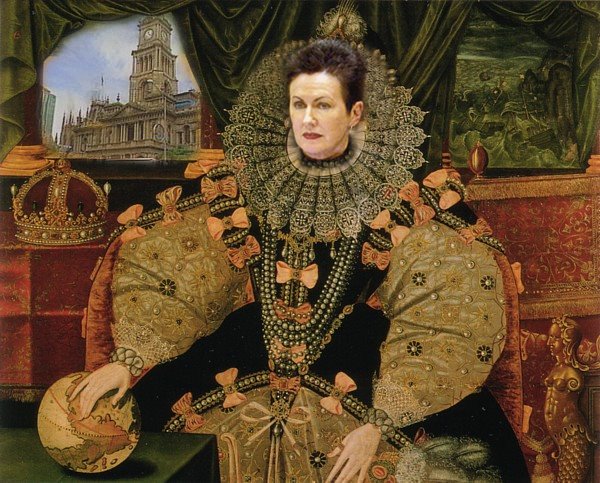
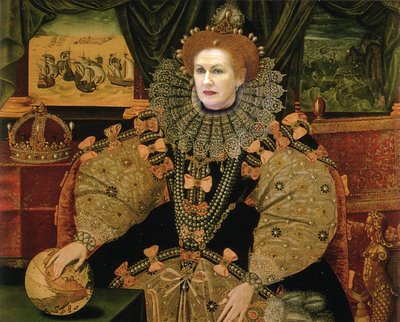
HM Queen Clover 1st

Queen Clover loved to walk her dogs. She would spend many an hour walking fast through the city parks and grounds. Her love for this terrified her loyal Councillors, who feared that she would seriously injure, or even kill herself, from such activity. Queen Clover would tire out her Councillors by walking hard, and early in her reign, Peter Seamer, her Chief Executive Officer, had to bring over some new dogs from the Queen's Macquarie Street palace, as Clover's own dogs were not fast or strong enough for her.
Queen Clover and Peter S would walk and talk together often. He was probably the most accomplished dog walker in the realm, and could match Clover's speed and vigour. In the summer of 2006, Clover and Peter S walked together almost everyday, while some of her minions bewailed that Clover was neglecting matters of the city state. Until finally Queen Clover accused Peter of treachery and then forced him to fall on his sword in order to save her flagging reputation.


(With apology to Queen Elizabeth 1 & Lord Dudley - http://www.elizabethi.org/uk/pastimes/)

and after repeated requests - the new Lord Mayoral portrait. At least we are not portraying the Lord mayor as a dog per Alan Moir. Back to more serious writings soon.

Tuesday, May 02, 2006

'Labor' Councillor reports - exaggerated!!

Whilst some of my opponents suggest that small 'l' Liberals are in the wrong party it seems The Australian today is keen to assist them.

Mayor's act 'like a queen'
D. D. McNicoll

May 02, 2006
SYDNEY Lord Mayor Clover Moore had behaved "like a monarch" in accepting the resignation of former City of Sydney chief executive Peter Seamer without reference to the council, one of the councillors claimed last night.


As Ms Moore banned the public and media from an extraordinary council meeting last night to discuss the reasons behind the surprise resignation, Labor councillor Tony Pooley told the Mayor she had acted "like a monarch" rather than a member of a 10-strong council.

"We believe you exceeded your authority in accepting Mr Seamer's resignation," Mr Pooley said. "We have a legal opinion that you exceeded your powers."
Mr Pooley also claimed Ms Moore had misled councillors over the circumstances of Mr Seamer's resignation.

"These are things that need to be talked about in open debate," he said.
Other Labor members, led by former federal minister Michael Lee and the Deputy Lord Mayor Verity Firth, also sought to have the matter heard in public, but after an hour of robust discussion Ms Moore used her numbers to stifle further debate.


Labor councillor Shayne Mallard said he would argue that the council should refer the whole matter to the NSW Ombudsman.


"We are concerned by the lack of transparency," he said, "The resources of the council are being squandered to protect your position. You are hiding behind expensive lawyers."


Mr Seamer resigned on April4, 14 months into a five-year contract.
Council sources said Mr Seamer's desire to ease the planning backlog before the council had caused friction with the Lord Mayor.


Speaking in defence of her decision to close last night's meeting, Ms Moore said she had accepted Mr Seamer's resignation under her authority to deal with employment matters relating to the chief executive.

Mr Seamer, who was on a salary of $360,000, left the council with a $180,000 payout.

http://www.theaustralian.news.com.au/story/0,20867,18996613-2702,00.html

and my letter to the Australian

Dear Editor

DD McNicoll's description of me as a 'Labor' councillor is grossly exaggerated.

yours sincerely


Shayne Mallard
Liberal Councillor

City of Sydney

Call for Ombudsman to Investigate Sydney CEO Sacking


MEDIA RELEASE Lord Mayor gags debate on calls for review by Ombudsman

Liberal Councillor Shayne Mallard has called on the City of Sydney Council to refer the circumstances surrounding the departure of the former CEO Mr Peter Seamer to the NSW Ombudsman for further independent investigations.

In a firey debate at tonight's Extra-ordinary Council meeting, Lord Mayor Clover Moore MP used her casting vote on every occasion to stymie debate centred on her role in the shock departure of former CEO Mr Peter Seamer.

"Clover Moore lectures about government openness and accountability but refuses to apply her own standards to her administration of the City," Shayne Mallard said.

In tonight's debate Councillor Mallard forshadowed a motion to refer the whole Seamer affair to the NSW Ombudsman for a genuinely independent review.

"The manner in the which the Lord Mayor has handled the resignation of the former CEO should be investigated by an independent external body such as the NSW Ombudsman" , Shayne Mallard said.

"Councillors have been kept in the dark about the Lord Mayor's relationship breakdown with the CEO. Mr Seamer was well respected by most members of the Council, Council staff ,City businesses and respected in the Local Government sector as a professional person" Councillor Mallard said.

"The fact that he has been given a generous payout negotiated by Clover Moore means that his resignation was a deal and he was paid hush money. The Lord Mayor has consistently refused to provide more information about her role in Seamer's departure to Councillors in spite of the requirement to properly consult with the elected Council."

The questionable payout , Lord Mayor's actions and the added costs for finding a third replacement CEO in the less than three years are serious financial issues that ought to be investigated by the independent Ombudsman.

The Lord Mayor's behaviour during the days surrounding Mr Seamer's departure also need further independent scrutiny.

"Ratepayer's money was used to silence Mr Seamer and tie the hands of the Councillors in legal red tape and the ratepayer's should know the facts ", Shayne Mallard added.

Councillor Mallard also called upon Council staff and anyone with relevant information to provide this to the Ombudsman and advises that they should do so without fear of retribution from the Council Administration.

Shayne Mallard's Proposed Motion:

Council notes with concern the circumstances and actions taken by the Lord Mayor surrounding the departure of the former CEO Mr Peter Seamer. Council is not convinced by the explanations offered by the Lord Mayor and is concerned that the Lord MayorÂ’s conduct has been unreasonable, unjust, unethical and potentially illegal. Council therefore resolves to refer all material regarding the circumstances surrounding the departure of Mr Seamer including but not limited to the Lord MayorÂ’s meeting with Mr Seamer on 4 April, consultation with Councillors on 4 April and subsequent public and private actions, to the NSW Ombudsman who has the jurisdiction to independently investigate and adjudicate the actions taken by the Lord Mayor and in doing so restore public confidence in the administration of the City of Sydney. Council calls upon all Council staff and other parties with relevant information to provide this to the Ombudsman without fear of retribution from CouncilÂ’s administration.

RELEASE ENDS 1st May 2006.

Sunday, April 30, 2006

Council meets over Seamer Departure

Council has an extra-ordinary meeting at 430pm tomorrow (Monday 1 May) in the Council Chamber - all welcome. The meeting has been called by Councillors still not satisfied by the 'sacking - resignation' of respected former CEO of the City of Sydney Mr Peter Seamer and the events surrounding his sudden and lamented departure.

Even an independent fan would have to admit that Clover Moore has been pretty shoddy in all this. It has not been her finest hour. Now it appears from the Australian weekend reports that she consulted a former Lord Mayor one week before 'consulting' Councillors about the problem's she was having with Seamer.

I'm shocked that Clover Moore has made such an amateur mess of this situation. Add to that a leak of the confidential legal documents to the SMH on Friday that clearly came from her office. She dares to lecture other Councillors and the 'major parties' (evidently now including the Greens) about ethical behaviour and transparency in public office, but doesn't seem to see her own hypocrisy. Whilst the SMH was a bit soft on her performance on the weekend - the Australian went to the issue of the appalling calculated character assassination of Seamer.

Here's a letter 5 Councillors have distributed to the press on the leak.


Dear Editor,

As Councillors of the City of Sydney we are appalled that the highly respected former CEO Peter Seamer has had his reputation dragged through the mud in the press. The leaking of allegations of 'serious misconduct' against Mr Seamer has been calculated to tarnish his reputation and has only served the interests of the Lord Mayor Clover Moore MP. All opposition Councillors declare no knowledge of this appalling leak to the media and have signed statutory declarations to that effect. We call upon Clover Moore to either provide evidence of this alleged 'misconduct' or withdraw the allegations and apologize to Mr Seamer for any damage and hurt this calculated public attack has caused to his reputation.

yours sincerely

signed

Councillor Verity Firth - Deputy Lord Mayor
Councillor Chris Harris
Councillor Michael Lee

Councillor Shayne Mallard
Councillor Tony Pooley


and the Australian's article:

Mayor held secret talks on sacking

Imre Salusinszky, NSW political reporter - The Australian
April 29, 2006
SYDNEY Lord Mayor Clover Moore consulted her predecessor, Lucy Turnbull, about difficulties she was having with the council's chief executive a full week before she informed any of her fellow councillors.
Former chief executive Peter Seamer resigned on April 4, an hour before Ms Moore says she was planning to seek the 10-strong council's approval to dismiss him.
The Weekend Australian has learned that, in several conversations during the week beginning March26, Ms Moore canvassed problems she was having with Mr Seamer with Ms Turnbull, the wife of millionaire federal Liberal MP Malcolm Turnbull.
Ms Moore refused last night to deny that the consultations with Ms Turnbull had taken place.
The news has enraged Ms Moore's fellow councillors, who have persistently argued she stepped outside her delegated authority in the manner in which she arranged for Mr Seamer's departure.
Liberal councillor Shayne Mallard said: "It is disturbing that Clover Moore discusses sacking Seamer with a former lord mayor but fails to consult the current councillors - and when she does it is shown to be dishonest."
Labor councillor Tony Pooley said: "It's extraordinary that she was consulting with a former lord mayor and not with councillors who have got current experience of the chief executive."
Mr Seamer's camp has broken its silence on the controversy surrounding his departure, telling The Weekend Australian leaked suggestions that he was guilty of misconduct were false.
With Mr Seamer holidaying in the US and bound by a confidentiality agreement, his lawyer Gerard Phillips said yesterday: "Peter categorically denies the suggestion that he was guilty of any conduct that would have warranted his dismissal and, in fact, he wasn't dismissed."
The so-called "opposition" members of the council - three Labor, one Liberal and one Green - issued a joint statement yesterday accusing Ms Moore of dragging Mr Seamer's reputation through the mud by leaking allegations of unspecified "serious misconduct" to the media.
Mr Mallard told The Weekend Australian that Ms Moore's office had"deliberately smeared Peter Seamer's reputation in a bid to protect the Lord Mayor's position".
"It's pretty hypocritical that we got a lecture on confidentiality two days ago, and now it's leaked by Clover Moore's side," he said.
Ms Moore told The Weekend Australian last night: "It appears that there has been an unauthorised disclosure of confidential information, and I have asked the acting CEO to take appropriate action."
One emerging explanation for the friction between Ms Moore and Mr Seamer is that during his 14-month tenure he tried to ease the planning backlog in the Sydney CBD that has led to development being siphoned off to Brisbane and Melbourne.
For example, Foster's Australia has been seeking planning approval for nearly three years for its $800million inner-city former brewery site.
A company spokesman said yesterday it felt the council's capability was "broad and can ensure the process continues".
A former senior City of Sydney officer said allegations of serious misconduct against Mr Seamer were "absolute nonsense" and that Ms Moore's approach to planning was the issue.
"The woman has no management or commercial experience, doesn't understand these issues, and wants to control everything," the former officer said.


Sunday, April 23, 2006

Hells Angels only Lanes on William Street!!

This city and governments at all levels have so much to learn by promoting cycling. The disastrous bike lanes emerging on William Street, Park Street and Oxford Street are so unsafe that no new bike riders will be stepping out from behind their traffic jammed car and ride a bike to work. I even witnessed a full size motorcycle use the new bike lanes on William Street to zoom on past all the frustrated jammed cars (I confess ours included on this occasion).

Maybe it's a 'Hells Angels only' lane - given their rumored moves on Kings Cross in today's press. And frankly with the misdirected aggression of taxi and 4X4 drivers only a Hells Angel would dare risk riding down our new life ending bike lanes. I don't wish it to happen but someone will be horribly injured or tragically killed dodging parking cars, buses and taxis.
I called for separate safer bike lanes - but was blocked by Clover Moore. Push bikes are not road vehicles and need to be segregated from ten tonne trucks and pedestrians as they are in Denmark and Germany - pictured below - they could have done this on William Street and frankly should be designing this style of roads for all the major cycling entry points to the city.


Speaking of Denmark - bike sales are on the way up again thanks to petrol prices and not Clover Moore's road closures!!

The Copenhagen Post
Business News

20 April 2006 Bike maker riding high as oil prices soar Business is moving into high gear for one Danish bike factory, as commuters drop horsepower for pedal power in order to escape high oil prices
High oil prices are helping the nation to rediscover its love affair with the bicycle. After a slight downturn in recent years, bike makers are predicting that sales will increase as people find ways to avoid higher pump prices.
The Kildemoes Bicycle Factory, a part of the Cycleurope company, saw both its profits and earnings fall in 2005. This year was already looking much better, however.
'We have twice as many orders as last year,' said General Manager Jens Friis to financial daily Børsen. 'We've been helped along by high oil prices and people's desire to get a little more exercise. A lot of people have stopped driving to work and have bought a bike instead. So we expect to increase our sales this year.'
Last year, Kildemoes produced 110,000 bikes at its factory near the city of Odense. This year the company expects sales to increase by as much as 10 percent.
In addition to capitalising on environmental, economic and health trends, Kildemoes is also using globalisation to make sure that bike production remains in Denmark.
'Several years ago, we outsourced our production of frames and forks to China. So we can definitely keep up,' Friss said, adding that efficiency measures had made Kildemoes the most productive of Cycleurope's factories.
The Copenhagen Post